


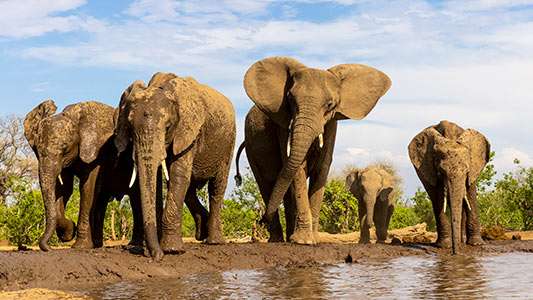

African antelope species are a diverse group of animals inhabiting a range of habitats on the continent ranging from deserts to forested areas.
The African Antelope Species
Words and images, Diana Andersen
The remarkable diversity of African antelope species makes any safari a memorable experience. While many visitors to Africa aim to see the ‘big five’ animals during wildlife safaris, the beauty of the antelopes often leaves a lasting impression. Antelopes are ungulates, a type of hooved animal that feeds on vegetation throughout the African landscape. They are highly adaptable, possessing unique traits that suit their specific environments.
Taxonomy of Antelopes
Varying significantly and ranging from very small to large, it is surprising to many that they all belong to the same family of animals. Antelopes are part of the Bovidae family and differ from deer, which belong to the Cervidae family of mammals. Unlike deer, males and some females have permanent horns. The horns of African antelope species provide some protection from predators but also play a part in battles for territory and mating rights. They vary between species from spectacular to much smaller and less significant.
The Bovidae family also includes cattle, goats, sheep, buffalo, and bison, all of which are ruminants with cloven hooves. Despite belonging to the same family, they don’t resemble other members of the family and are categorised into various sub-families and genera. There are notable similarities among certain species within these subfamilies. For instance, the topi, tsessebe, and hartebeest share similar physical characteristics and belong to the subfamily Alcelaphinae, although each is classified under a different genus.

Impala ewe drinking at a waterhole.

ANIMALINFO PUBLICATIONS
DIANA ANDERSEN

The physical appearance of some species is slightly reminiscent of goats, cattle and, to a lesser extent, sheep. However, for the most part, they are distinctly different from other Bovidae mammals. Still, their association with other Bovidae mammals has led to a confusing mixture of terms used to describe the sexes and offspring. African antelope species, such as impalas and smaller species, are referred to as rams, ewes, and lambs, while larger antelopes are called bulls and cows, with their offspring known as calves. The term, fawn is incorrect for any antelope species, as it refers to the progeny of deer species.

Topi, subfamily Alcelaphinae
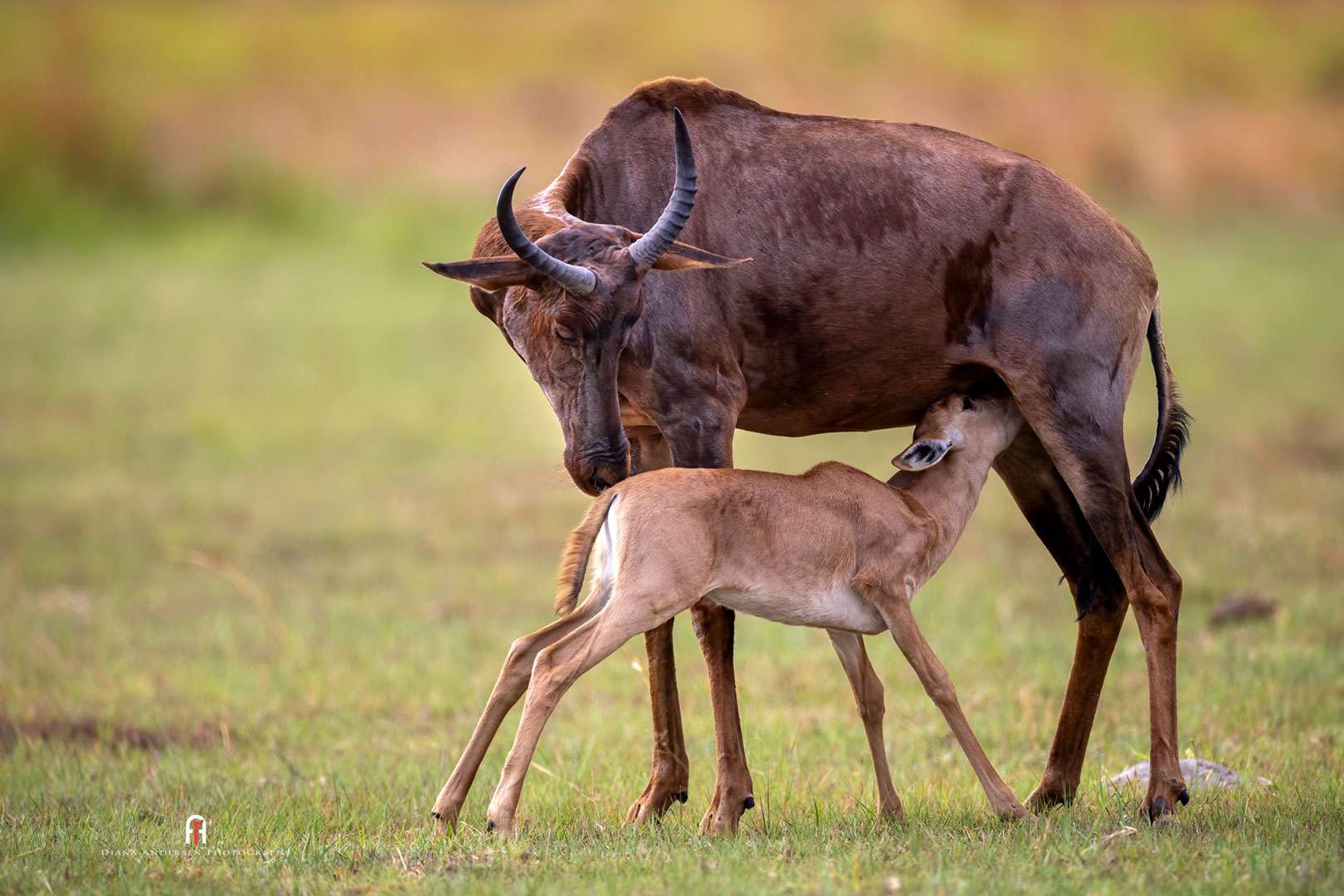
Common tsessebe, subfamily Alcelaphinae

Hartebeest, subfamily Alcelaphinae
The Unique Adaptations of the African Antelope Species
Antelopes are known for their speed, grace, and agility, traits that are a survival necessity when they are on the menu for many of Africa’s predatory species, including big cats, hyenas, and African hunting dogs.
Antelopes inhabit areas as diverse as the species themselves within the African continent. They occur in everything from the jungle to the desert. The habitats of African antelope species can also vary, even within each type. For instance, while impalas avoid open grasslands, they inhabit the rocky areas and riverbeds of southern Botswana, the Okavango Delta’s floodplains, as well as the arid Kalahari and Namibian deserts.
Many species of antelopes have adaptations that enhance their survival in response to the challenges of their lives. Some, like the Sitatunga and Lechwe, are semi-aquatic and adapted to living in swampy wetlands, using water bodies to help escape predators. Other antelopes possess exceptional speed, allowing them to evade danger in open areas; for example, the tsessebe can reach speeds up to 90 km/h. Unlike antelopes such as wildebeest, which thrive in large herds on open plains, klipspringers are usually found alone, in pairs, or small family groups. They are uniquely adapted to navigate rocky outcrops, which makes it difficult for predators to reach them.
Conservation Status of African Antelope Species
There are 72 species in Africa. According to the IUCN Red List, while some species are stable or increasing, many are in decline, with some reaching statuses of threatened, near threatened, and critically endangered.
10 Beautiful African Antelope Species
1. Common Eland (Taurotragus oryx)
Common elands are a large species of African antelope found in eastern and southern Africa, with males reaching heights up to 1.6 meters at the shoulder. While they are sizable, they are not the largest antelope; that title belongs to the closely related and critically endangered giant eland (Taurotragus derbianus). Both male and female elands have spiral horns, but females tend to have longer, thinner horns. Males display a more pronounced dewlap, a flap of skin between the neck and chest, and are typically darker in colour than females, becoming even darker as they age.
Males are often solitary, while females with calves tend to form large herds. These herds act as nurseries, protecting calves of various ages. Calves stay in these nursery herds for up to two years before dispersing to establish new herds. While eland can’t sustain a gallop, they can jump over each other effortlessly and trot for hours.

Common Eland Cows

Eland Herd at a Waterhole in Botswana
2. South African Oryx (Oryx gazella)
The South African oryx is one of four species found in Africa and the Middle East. This large antelope is distinguished by its beautiful pale fawn colouring and striking black and white facial and leg markings. Found in the Namibian and Kalahari Deserts, the oryx adapts exceptionally well to desert climates. It has remarkable physical adaptations that help it conserve body fluids and cool off in extreme heat. Oryx typically feed in the early morning and late afternoon, when desert vegetation retains moisture from dew, reducing its reliance on water.
Both males and females possess long, annulated horns that are almost straight and can be formidable enough to impale a lion. Despite their impressive horns, dominance among oryx is determined more by size and age than by combat. However, evenly matched males may need to engage in fights to establish their dominance and claim their territory. A dominant male defends the territory, but subordinate males often join herds of females and their young, forming mixed herds. Despite their Least Concern (LC) conservation classification, their habitat has dramatically reduced, and 45% live on private land.
3. Greater Kudu (Tragelaphus strepsiceros)
The Greater Kudu is one of the largest and most beautiful antelope species in Africa. Male Kudus have impressive horns that typically twist upward two and a half times, with some even reaching a complete three rotations. During battles, males may get their horns tangled, which can lead to fatal consequences as they struggle to free themselves. Females, on the other hand, do not have horns and are noticeably smaller than males. Both sexes have large ears, body stripes, and a short mane, while males also feature a coarse beard.
Greater Kudu are browsers, feeding on leaves and shoots, but they will also feed on grasses. Their diet sees them remain lean and slender most of the time. Females often travel in small groups and, like many other antelopes, will conceal their calves after birth for up to five weeks. Most populations are relatively sedentary unless the need for food and water forces them to travel longer distances.

South African Oryx in the Kalahari Desert

Kudu at a Waterhole in Botswana
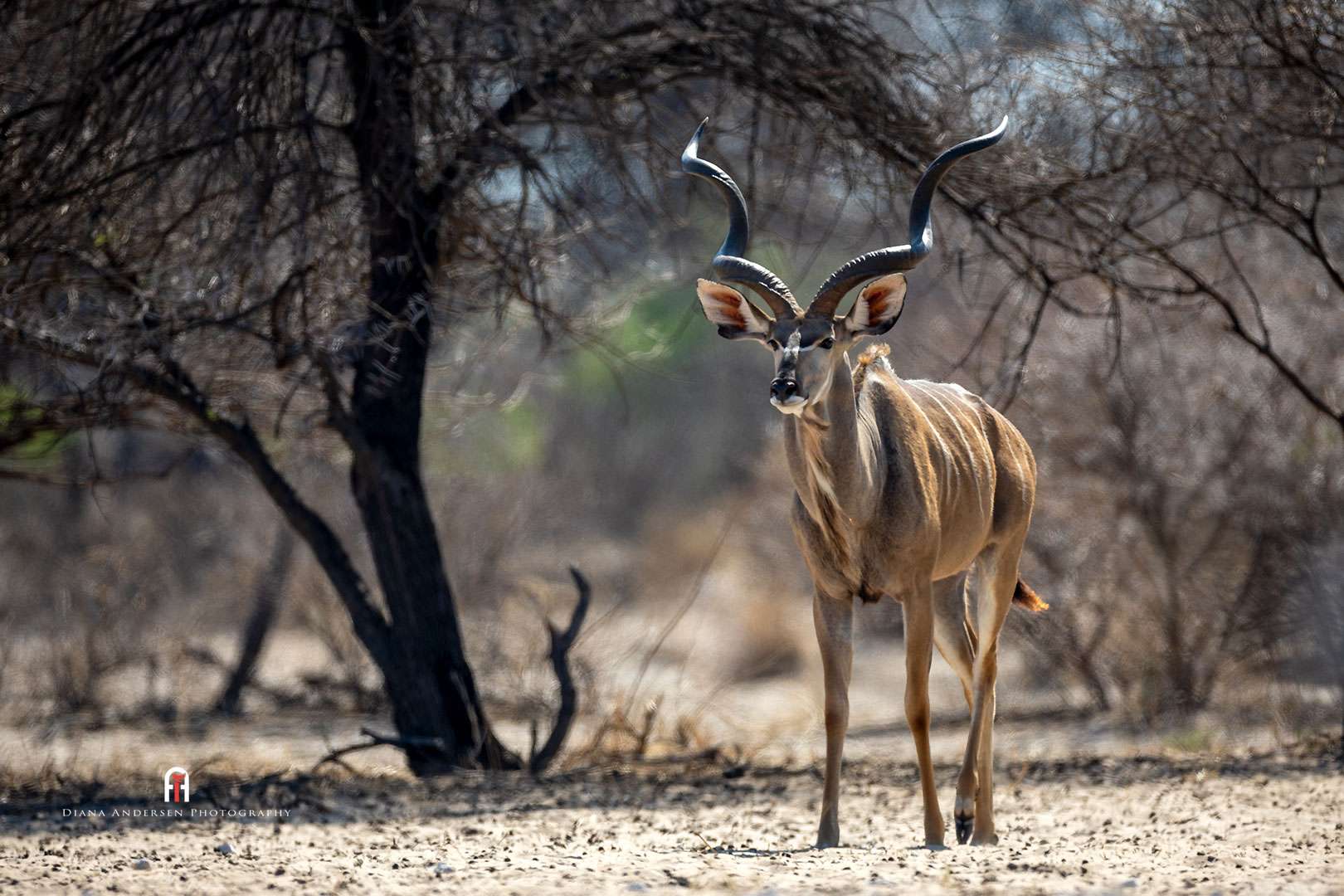
Mature Male Kudu in the Kalahari Desert
4. Waterbuck (Kobus ellipsiprymnus)
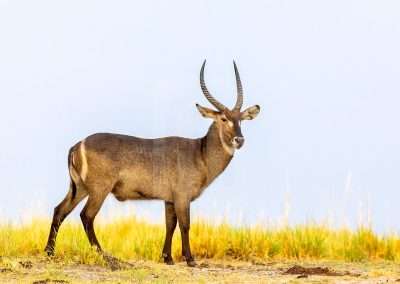
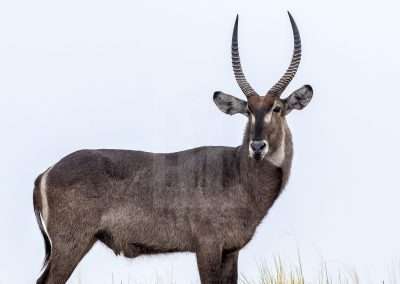
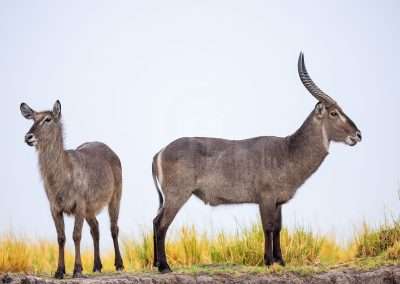
Waterbucks are large antelopes, with males reaching 1.3 meters at the shoulder, characterised by their oily, water-resistant, shaggy coats. Despite their name suggesting an affinity for water similar to that of semi-aquatic antelopes like the Lechwe, they do not rely on water sources for protection. Instead, they depend more on water than other species, primarily because they are grazers; staying close to water provides them with more readily available food.
Males are approximately 25% larger than females and possess impressive, ringed, curved horns that reach up to one meter in length. While there are 13 recognised subspecies, they fall into two groups: the common (ellipsenprymnus) waterbuck (4 subspecies) and the defassa (K.e.defassa) waterbuck (9 subspecies). The main distinguishing feature is that the defassa group has broad white patches around their rump, whereas the common group has a distinctive ring around their rump.
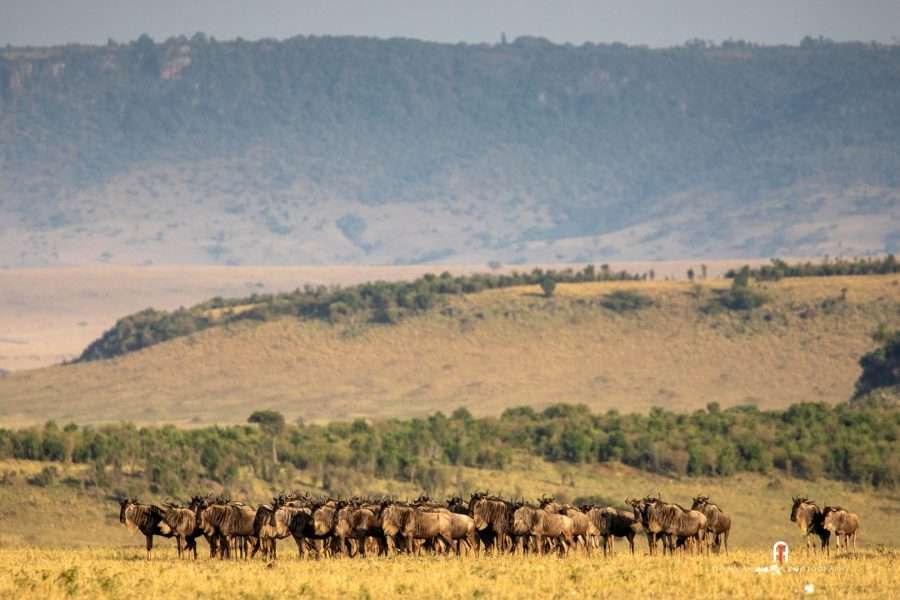
5. Blue Wildebeest (Connochaetes taurinus)
The blue wildebeest, also known as a gnu, is one of Africa’s most widespread and abundant antelope species. Unlike other aesthetically pleasing antelopes, the blue wildebeest is considered one of the “Ugly Five,” a term used to describe Africa’s least attractive animals, which also includes the hyena, vultures, marabou storks, and warthogs. Some Kenyans claim that God created the wildebeest using leftover parts from other animals; it is said to have the face of a grasshopper, the horns of a buffalo, the sloping back of a hyena, the beard of a goat, and the tail of a horse, although variations of this saying exist.
Blue wildebeests are most famous for the Great Migration, which involves thousands of animals travelling in large herds to feed on fresh grasses following seasonal rains. This annual journey begins with the wildebeest giving birth between January and March in Tanzania. After this period, they gradually move to the Masai Mara in Kenya, following a yearly circular route. However, not all wildebeest are migratory. Some populations are sedentary, moving very little as long as they can find food. Blue wildebeests occur in several countries in Southern Africa, including Kenya, Tanzania, Botswana, Mozambique, South Africa, Zambia, Zimbabwe, Angola and Eswatini. There is another closely related but lesser-known species, the black wildebeest (Connochaetes gnou).




6. Impala (Aepyceros melampus)
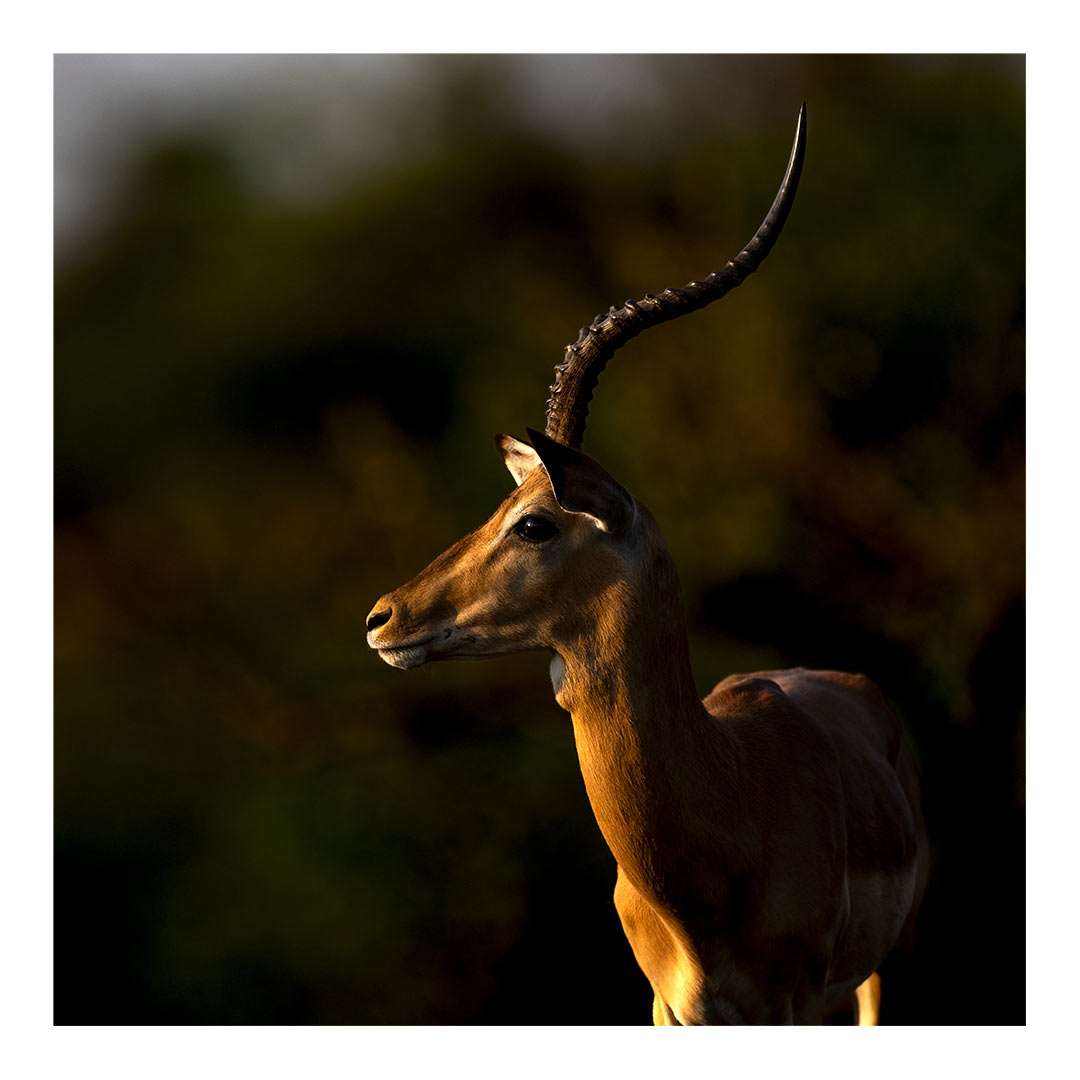
Impalas are the most abundant antelope in Africa and the first that most people on safari will encounter. These elegant, medium-sized antelopes are colloquially known as the ‘McDonald’s antelope’ because they have markings on their rumps resembling the letter ‘M’. They have large eyes and ears, with exceptional hearing, and commonly alert other species to predators with their alarm calls.
Dominant males can have up to 50 females in their harem and sport beautiful, lyre-shaped horns used in combat. Males compete for dominance in the rutting season, and those unable to form a harem gather in bachelor groups. Mating occurs over a few weeks, resulting in all impala ewes giving birth around the same time.
7. Cape Bushbuck (Tragelaphus sylvaticus)
The Cape bushbuck, also known as common bushbuck, is widespread throughout sub-Saharan Africa. This beautiful, medium-sized antelope is often seen in and around tourist camps, where it takes advantage of the safety from predators that being near humans provides. Bushbucks tend to be solitary but frequently forage on vegetation in proximity to other individuals.
Overall, bushbucks are golden brown but with variable spots and stripes. Males have horns and tend to carry more markings than females, with darker points on their faces and legs. There is considerable variation throughout the range of the bushbuck species, resulting in the classification of up to 40 subspecies in the past. However, scientists now group them into two subspecies T. s. scriptus in the north and T. s. sylvaticus in the south.


8. Lechwe (Kobus leche)
Lechwe are semi-aquatic animals, meaning they have adapted to live in and around water sources such as floodplains and swampy areas. While they do feed on submerged grasses, their primary reliance on water is for protection from land-based predators. With powerful hindquarters, lechwe can navigate shallow water with speed and agility that land predators, such as lions, leopards, and wild dogs, cannot match. However, there are also dangers in the water, particularly from lurking Nile crocodiles, so lechwe tend to stay close to the water’s edge and only enter it when they need to escape.
The Okavango Delta is home to numerous red lechwe, a subspecies recognised for their distinctive golden coats in this region. Males possess beautiful spiral horns, while the females are hornless. They form herds that, like impala, often consist of a dominant male and many females or bachelor herds.


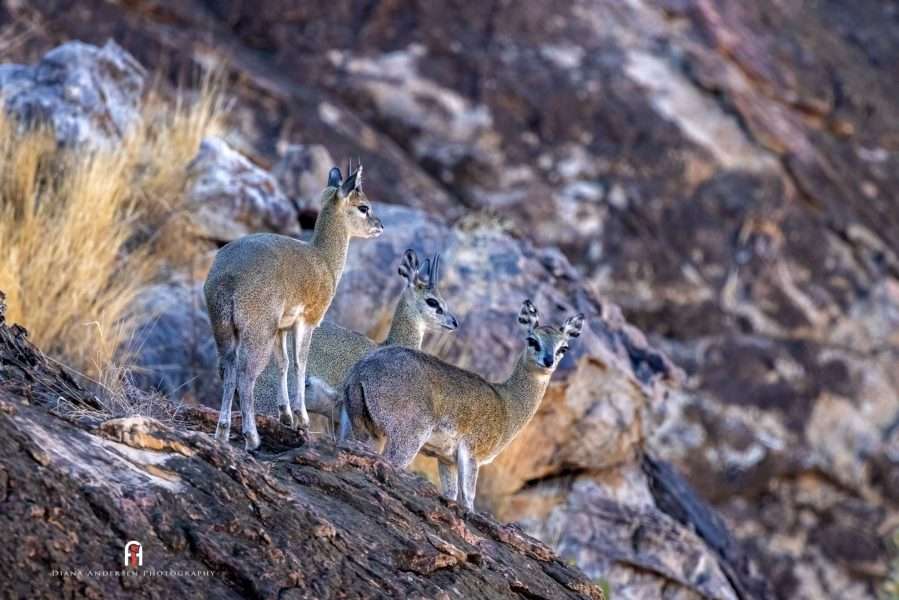
9. Klipspringer (Oreotragus oreotragus)
The klipspringer is one of Africa’s smaller antelopes, standing only 60 cm tall at the shoulder. In eastern and southern Africa, klipspringers inhabit steep rocky areas, particularly kopjes, in pairs or small family groups. As members of the dwarf antelope family, these unique animals have developed remarkable adaptations that enable them to navigate rocky outcrops with ease. Given their small size, this ability protects them from their main predators, which include big cats and even large snakes.
A key feature of their adaptation is the unusual shape of their cylindrical hooves, allowing them to stand on only the very tips of their hooves. Klipspringers have a predominantly grey colouration, with small, upright black horns and large orbital glands beneath their eyes, which they use to mark their territory.
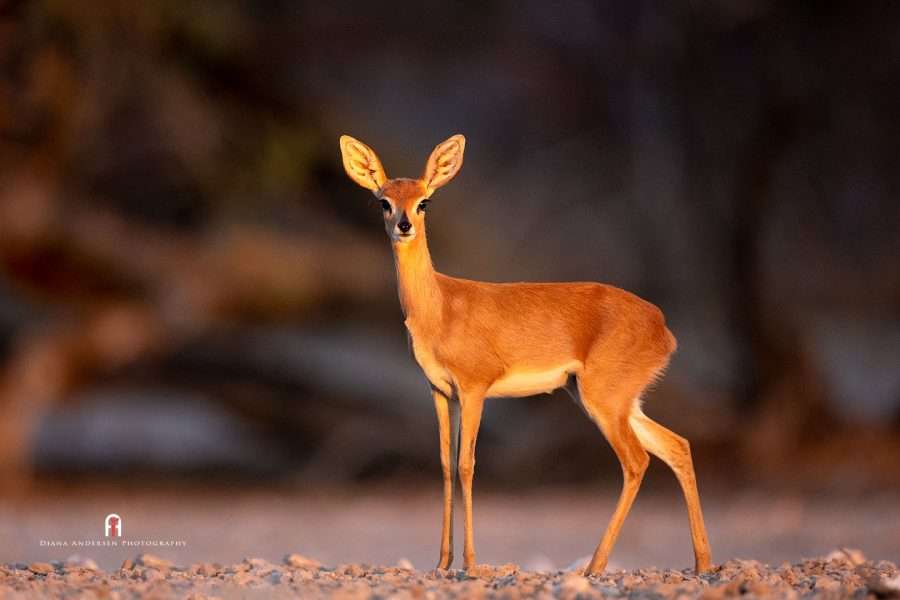
10. Steenbok (Raphicerus campestris)
Undoubtedly, the Steenbok is one of Africa’s most beautiful antelopes. Standing around 50 cm tall at the shoulder, they are also one of the smaller species, with Steenbok ewes slightly larger than males. They are exceptionally well adapted to desert and arid environments, obtaining all the moisture they need from their herbivorous diet. Both rams and ewes are typically solitary animals, only coming together during the courtship period.
Ewes conceal their young for the first two to three weeks. After that, the lambs grow quickly, with females reaching sexual maturity at around nine months of age and giving birth to their first lamb at approximately fourteen months. Both rams and ewes are territorial, and like the klipspringer, they have orbital scent glands below their eyes that they use to mark their territory by rubbing against grasses and shrubs.


Share this
Shop Stock Images
High-quality stock images for personal use as wall art, gifts, and greeting cards. Licences available for commercial use, including websites, publications and commercial print runs.
Related Reading
AMAZON
We are a participant in the Amazon Services LLC Associates Program, an affiliate advertising program designed to provide a means for us to earn fees by linking to Amazon.com and affiliated sites
IMPALA
A beautiful limited-edition print by Diana Andersen. For anyone who has witnessed elephants in Africa, this image will take you back to the special place that is Africa.
SHOP BOOKS