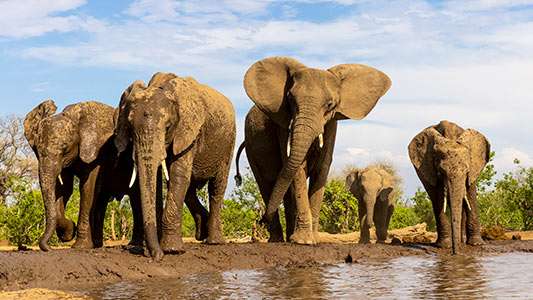

For many people, seeing wild elephants is a dream, and there are many destinations in Africa where you can do just that, with Botswana being among the best. However, for photographers seeking exceptional opportunities to capture images of these iconic and magnificent animals, there are other factors to consider. So, where are the best places to photograph elephants in Botswana?
Seeing and Photographing Elephants in Botswana
Words and images, Diana Andersen
Chobe National Park
Chobe National Park is one of the premier destinations to see and photograph elephants, particularly during the dry season from May to October in Botswana. Not only are there significant numbers of elephants, but the opportunity to photograph them from the river also allows for clearer, less cluttered, and more visually appealing images. Elephants are browsers, so it can be difficult to isolate them from the vegetation when they are feeding in the inland areas.
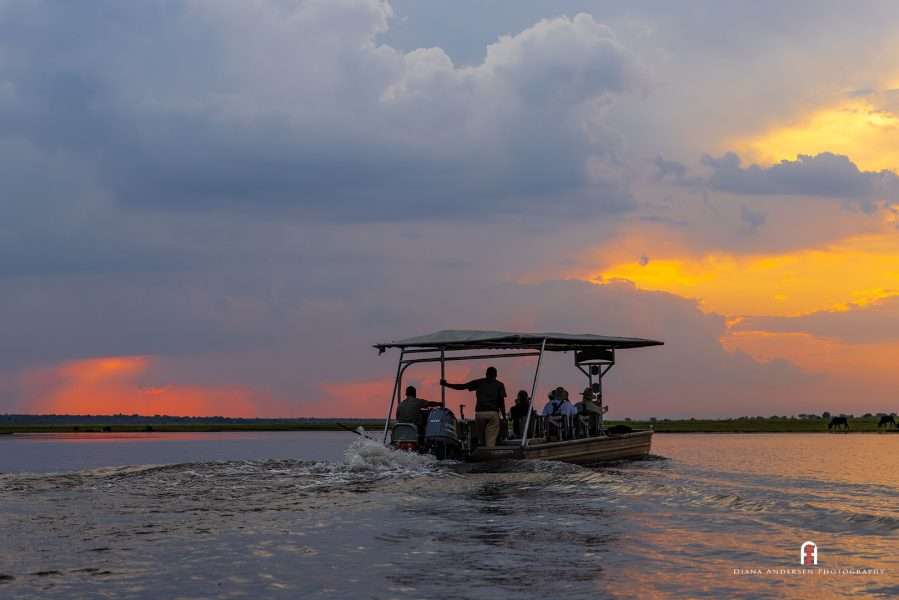
Many companies offer Chobe River boat tours, all of which provide the opportunity to see and photograph elephants from the water. However, if you are serious about your photography, it is worth choosing specialist photo tour operators, such as Pangolin Photo Safaris and CNP Safaris, that utilise photo boats equipped with gimbals and swivel chairs.
This setup significantly enhances your chances of capturing stunning images of the wildlife along the river, and, as a bonus, photography tuition is also part of the river activities offered by these operators. As the river is part of the National Park, there are restrictions on river usage hours. However, the photo boats are the first to set out and the last to return to the dock, providing you with optimal lighting conditions for photography.
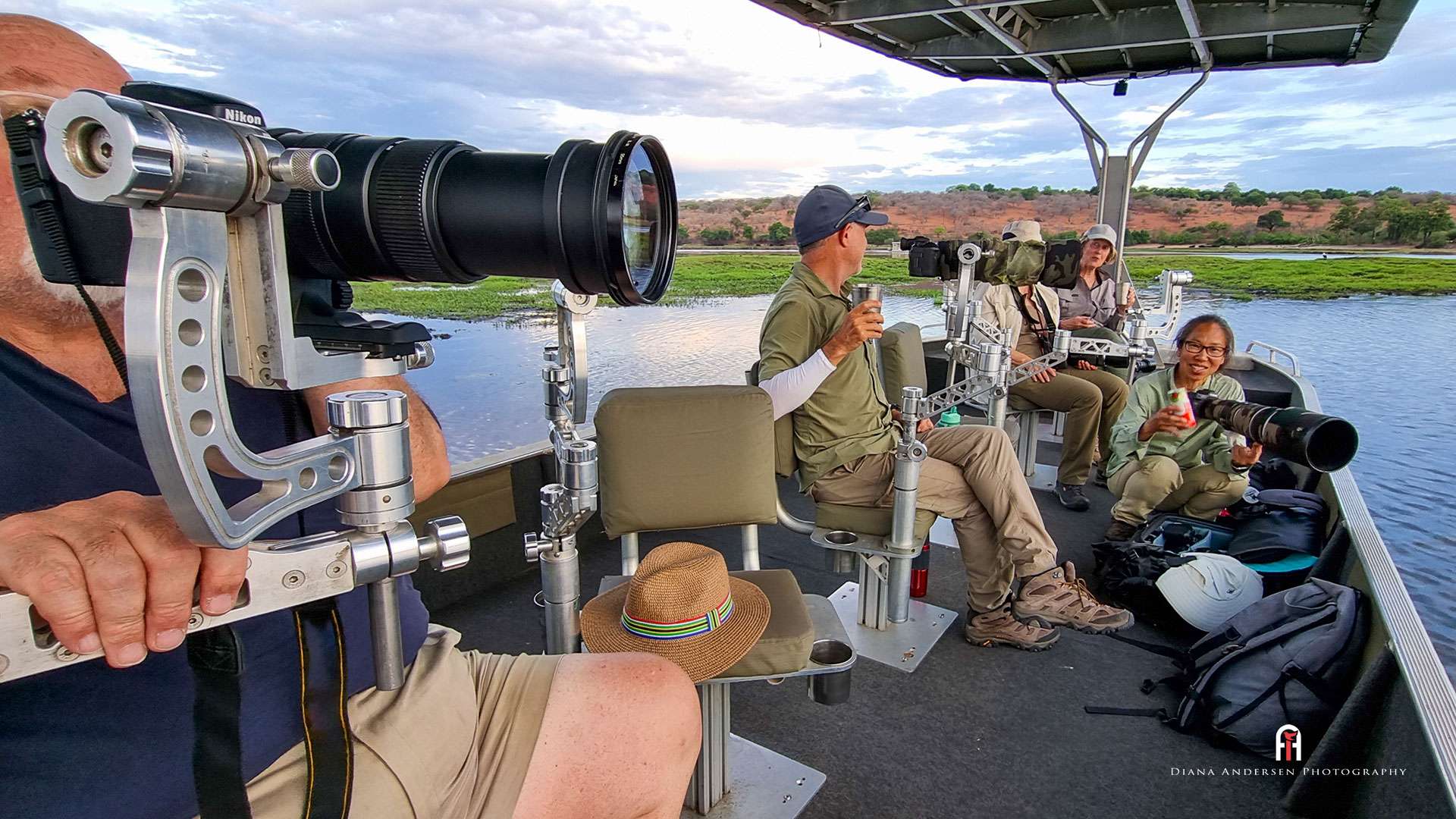
Pangolin Photo Boat on the Chobe River

ANIMALINFO PUBLICATIONS
DIANA ANDERSEN
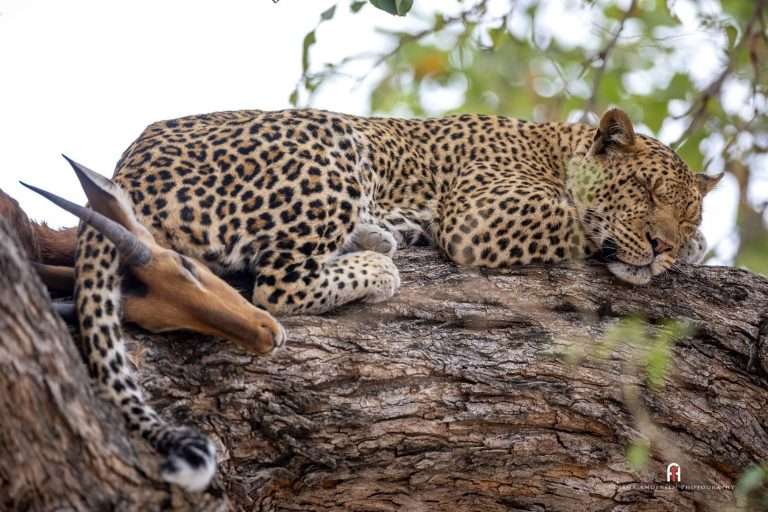
Photographing Elephants from the Chobe River
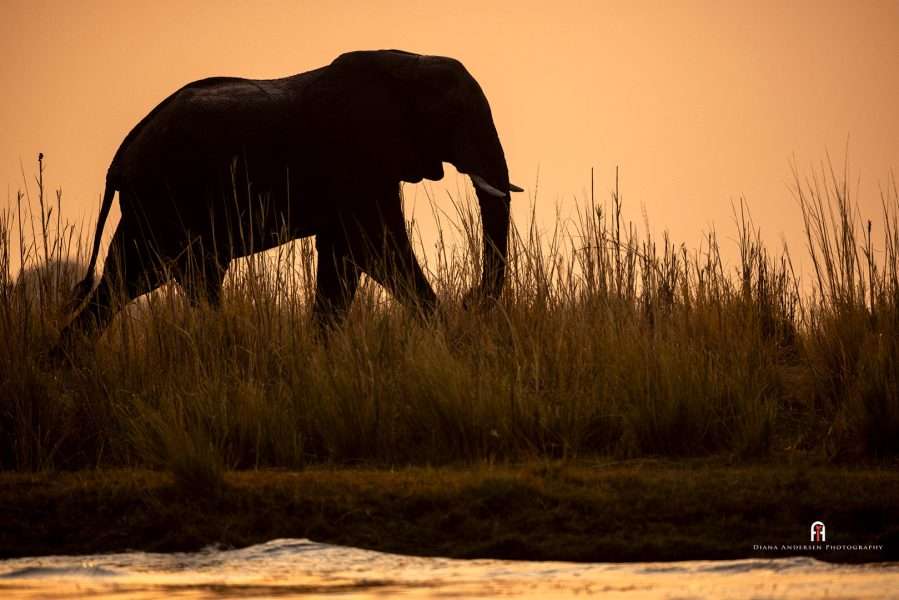
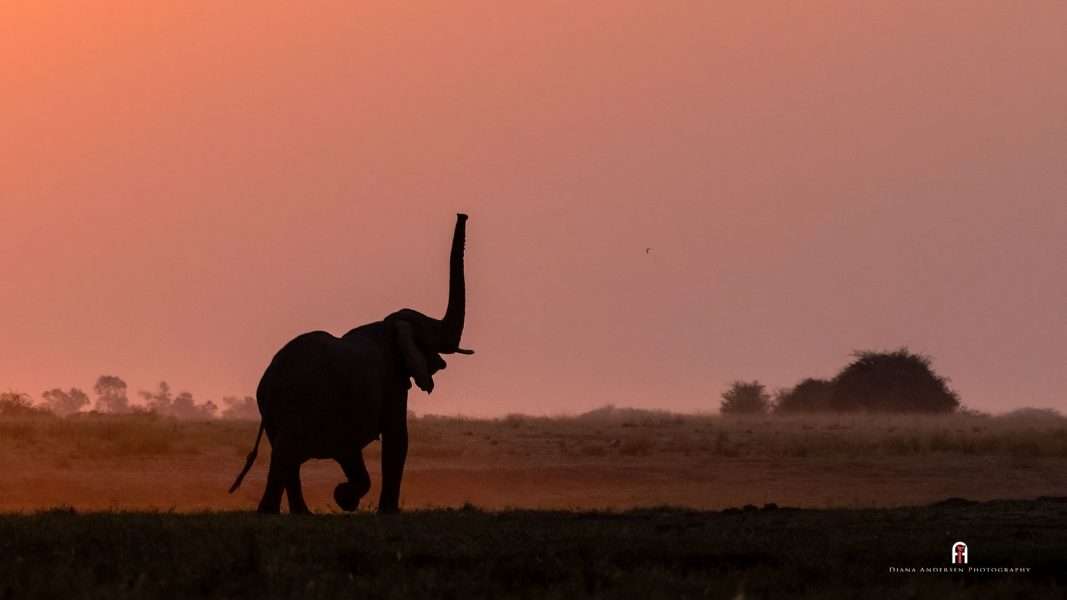
Elephants visit the Chobe River daily in the dry season, particularly in the early morning and late afternoon, providing excellent opportunities for colourful sunrise and sunset shots. They frequently cross the river to reach the grassy islands and also stand in the water to both cool off, drink and feed on partially submerged vegetation.
If you are shooting with a long lens, the boats will get close enough for creative close-ups, but if you want to take larger group shots or environmental shots, a shorter, wider lens is a must. Elephants are also a common sight in the park itself, away from the river, but the photographic opportunities are less appealing. There are often many vehicles in the park competing for space, and during the dry season, the brown, scrubby vegetation can create cluttered images.
As the rainy season approaches in November, storm clouds often gather, providing spectacular skies that add another dimension to your images. The heat at this time of year can be oppressive, so this is something to consider if you don’t enjoy hot conditions. Once the rains arrive in earnest, pools form away from the river, and the elephants and other game become less reliant on the river as a water source. Therefore, while you will still see elephants, the sightings are likely to be more sporadic. On the positive side, the dry bush springs to life with lush green vegetation, providing a more appealing background for your images.
To explore the Chobe area, the best option is to fly from Johannesburg to Kasane Airport. If you are already visiting Victoria Falls in Zimbabwe, Chobe is just an hour-and-a-half drive away. However, be aware that you will need to pay for another visa entry if you return to Zimbabwe unless you have purchased a KAZA Unvisa or a double-entry visa before entering Zimbabwe.
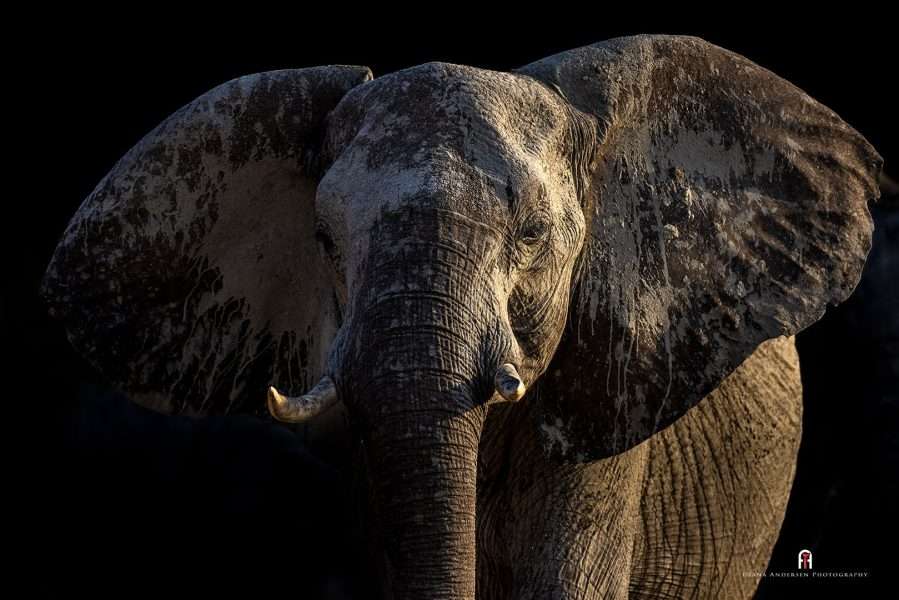
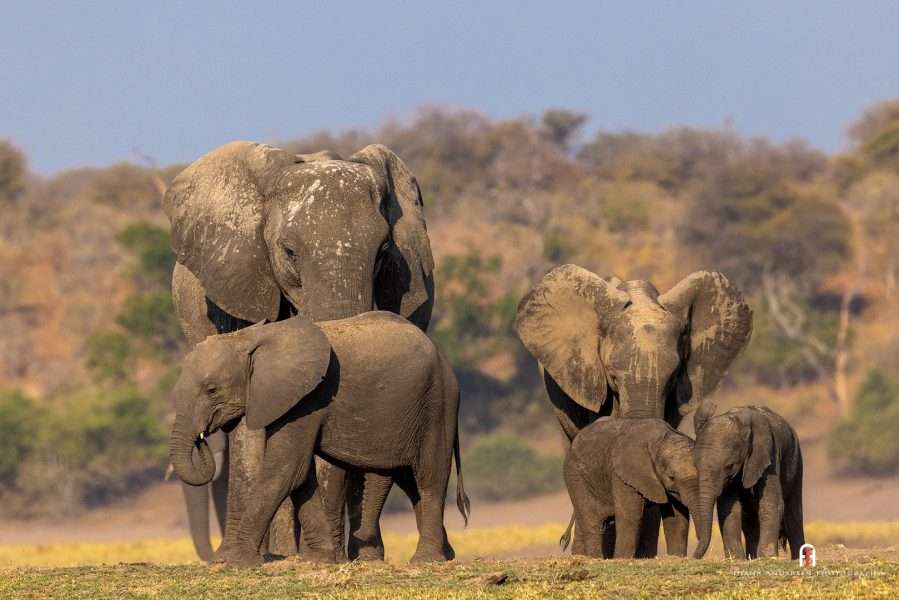
Elephants in the Okavango Delta
Another fantastic option for seeing and photographing elephants in Botswana is the Okavango Delta. This vast inland Delta is home to large populations of elephants, as well as many other wildlife species. It combines exceptionally well with a stay in Chobe, as scheduled charter flights to the Delta Camps are available directly from Kasane.
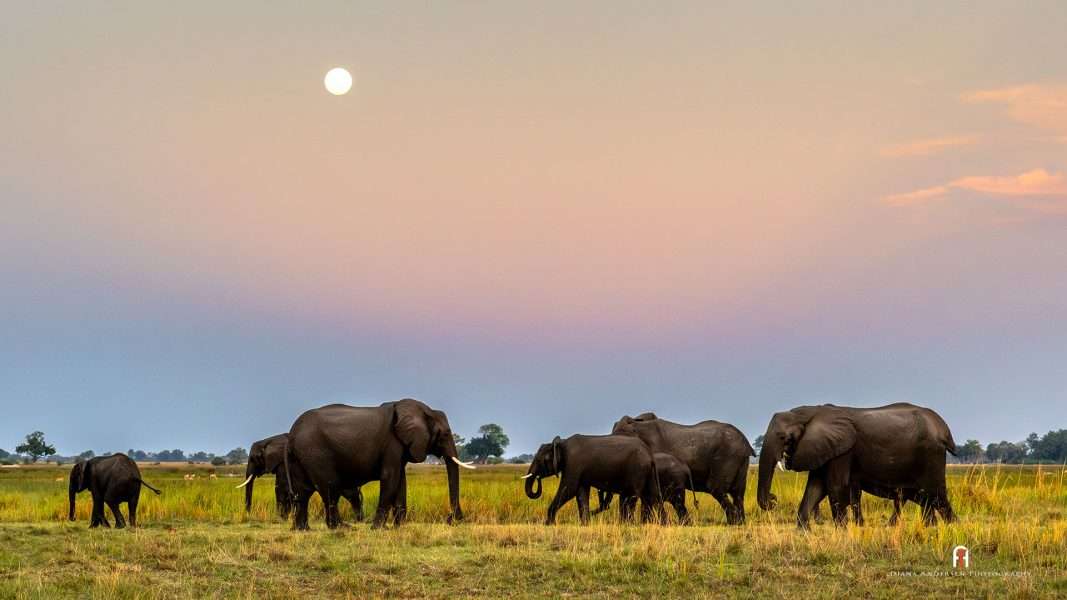
The landscape consists of grass plains, permanent marshlands, and islands, providing ample food and water that attract elephants after periods of seasonal flooding. While the open plains offer opportunities for capturing stunning environmental shots, unlike in Chobe, where you can position yourself in areas frequented by elephants, here you will need to rely on your guide to locate elephants as they move throughout the Delta. The abundance of food and water, made possible by the annual flooding, allows elephants to roam over a wide area.
Luggage Restrictions for Okavango Delta Safaris
There are numerous camps and private conservancies in the Okavango Delta, which visitors reach by small, scheduled charter flights from Maun or Kasane. However, this mode of transportation presents several challenges for photographers. Firstly, travelling to the Okavango Delta tends to be more expensive than visiting other destinations in Botswana.
Secondly, the limitations of small planes restrict the amount of luggage you can bring in terms of size, type, and weight. It is advisable to use soft-sided duffel bags, as hard cases do not fit in the small luggage compartments of the planes, and the total weight allowance, including your camera gear, is typically limited to 20 kilograms.
The standard of accommodation is generally high, particularly in private conservancies. Shinde, a beautiful and one of the oldest camps in the Delta, is typical of the quality of luxury camps in the area. However, some camps are more affordable but may offer less abundant game.
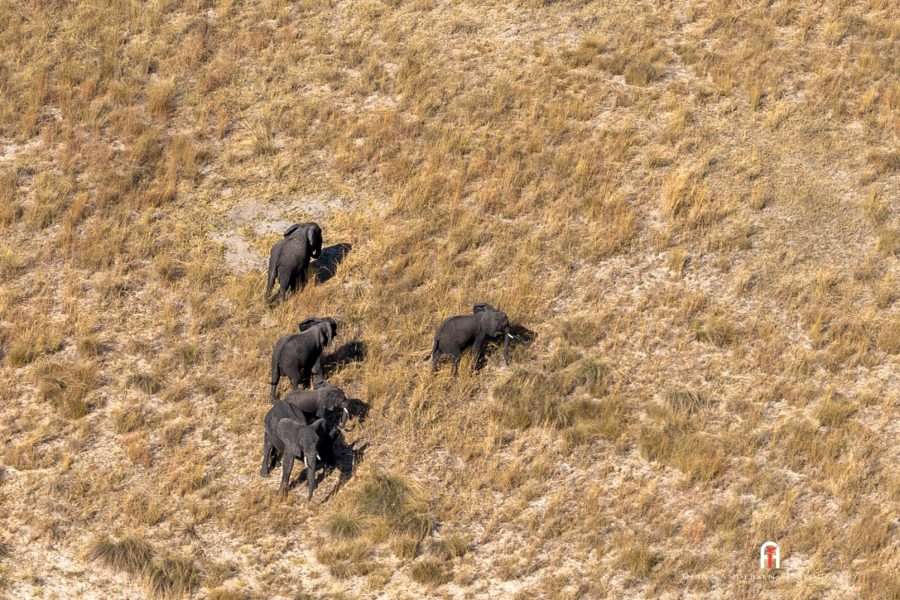
Some camps offer optional helicopter flights that allow you to see and photograph elephants from above. However, you will be pretty high up, as elephants are not fond of large flying objects. Large, heavy prime lenses are difficult, if not impossible, to manage inside a helicopter; therefore, wide-angle or smaller zoom lenses are more suitable for use in this environment.
Elephants in the Mashatu
The third location that offers exceptional opportunities to see and photograph elephants is the Mashatu Game Reserve, located in the southernmost part of Botswana. Mashatu boasts one of the largest populations of elephants on private land. Although the behaviour of the elephants may vary depending on the season, you will not be disappointed with the photographic opportunities that Mashatu provides.
Unlike the flat floodplains of the Okavango Delta, several large rivers carve their way through Mashatu’s landscape. During the dry season, elephants utilise the dry riverbeds to traverse the reserve while feeding on the abundant Moapane trees that grow within it. They also dig for water in the riverbeds, creating small pools that attract other animals that need water.
Photographic Hides in Mashatu Game Reserve
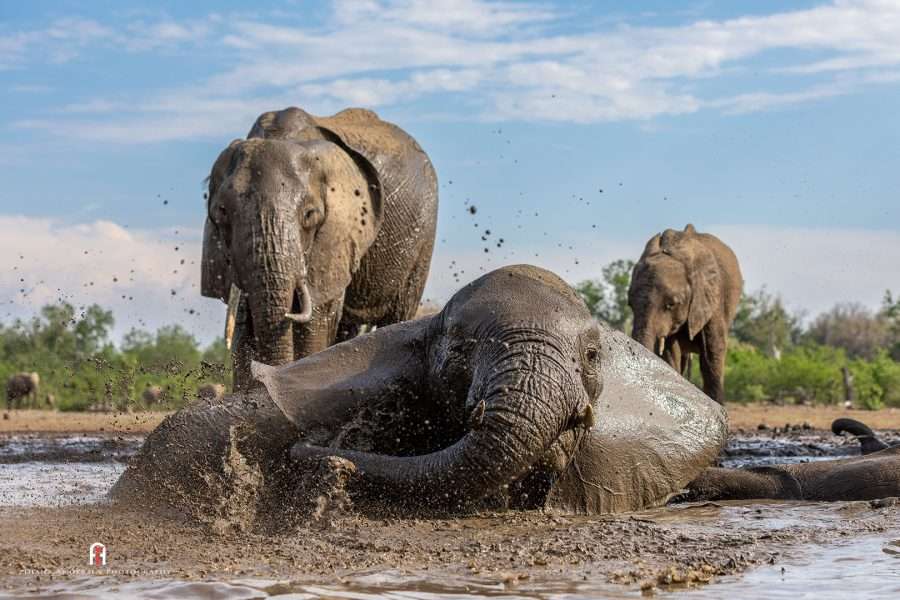
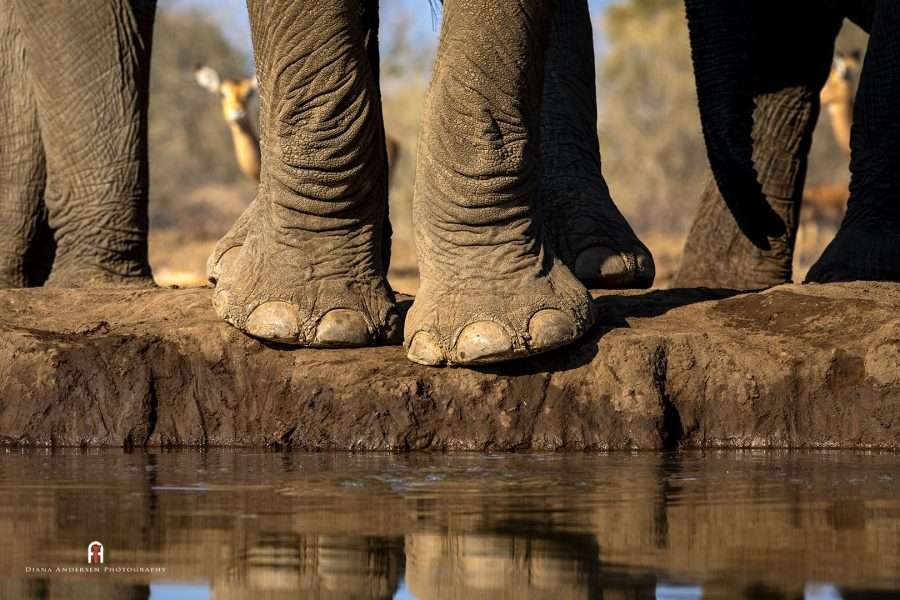
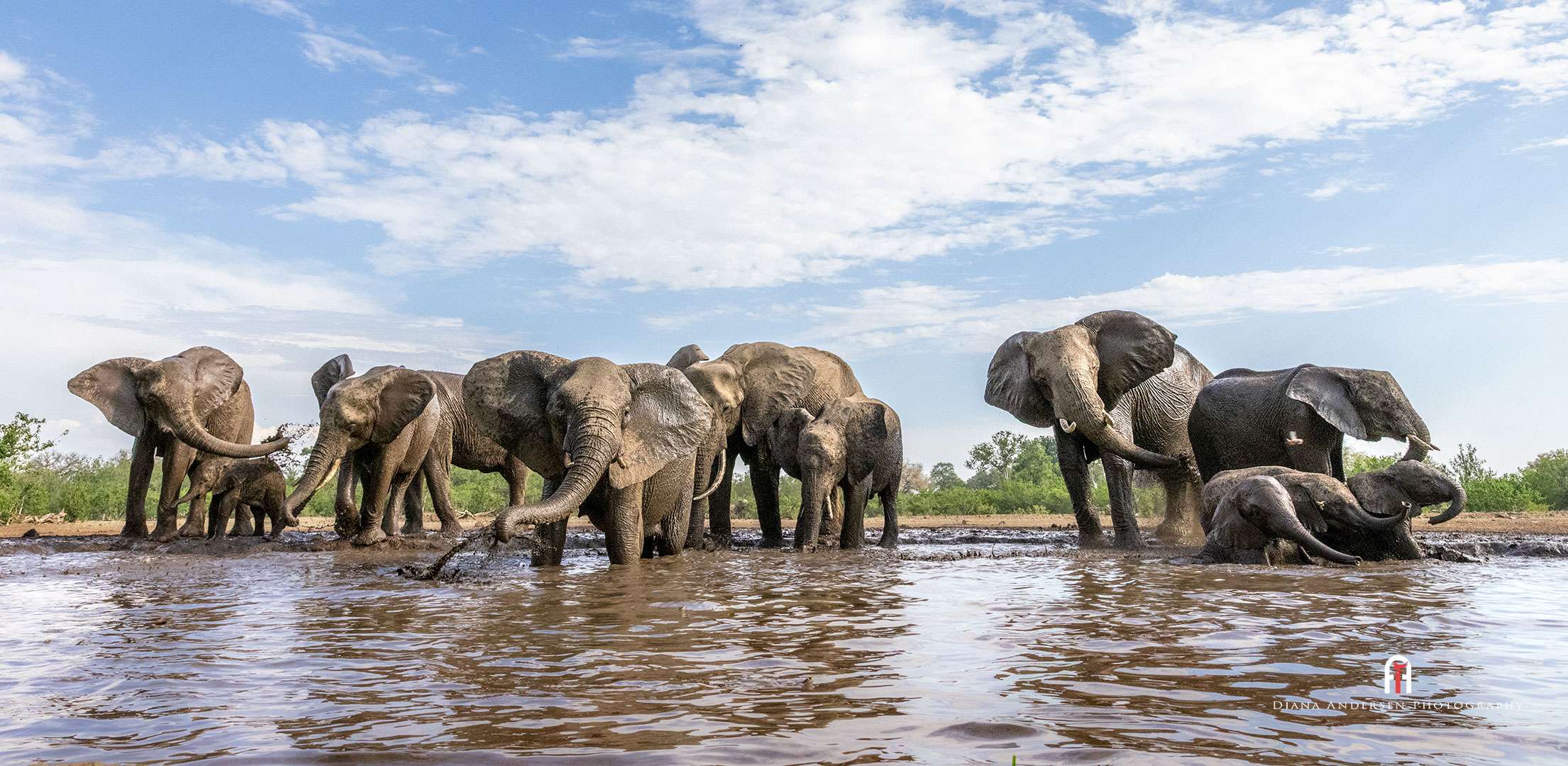
The dry season attracts elephants to the permanent waterholes maintained by Mashatu. There are two waterholes—one on the northern side of the reserve and the other on the southeastern side—that feature underground photographic hides, providing excellent opportunities to observe and photograph these majestic animals up close. The Matebole Hide, located on the north side, is well-established and popular with elephants, especially during hot and dry conditions. There is a significantly higher chance of seeing elephants playing and bathing in the waterholes during the hotter months of October and November.
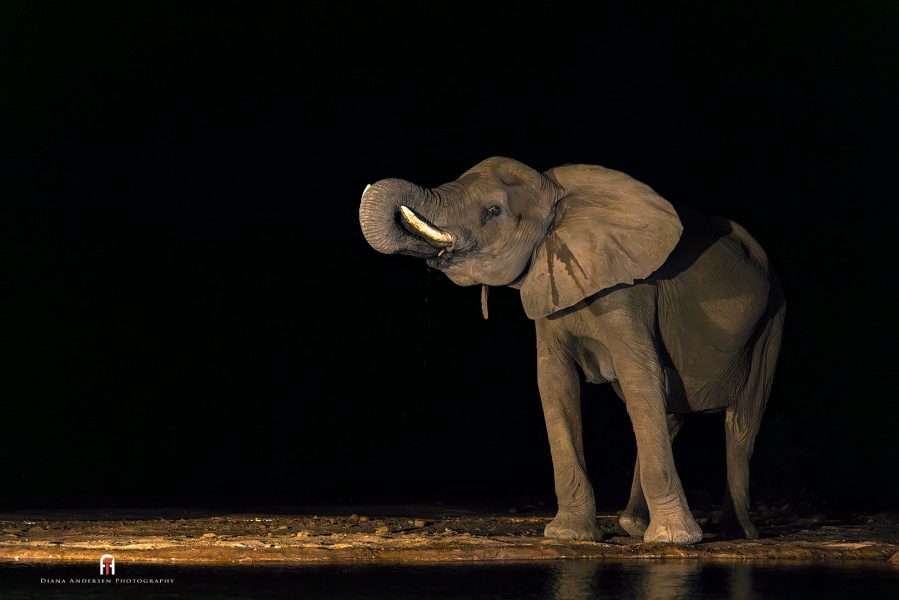
This daytime hide can accommodate up to eight photographers at a time and includes photographic tuition from the resident photo host or your photo host if you are on a photo tour. You can book the hide for the morning, afternoon or all day. On the southeastern side, the Lala Limpopo Hide is a new addition to the reserve, outfitted specifically for night photography and beautifully appointed for the comfort of guests spending the night. Both hides are optional activities in the reserve and, therefore, are booked and paid separately from your standard inclusive accommodation and game activities.
During the green season, following the rains, Mashatu’s barren, rocky areas are transformed into lush pastures dotted with thousands of yellow flowers, which also attract elephants as they enjoy the abundance of food after the long dry season. This seasonal phenomenon offers a unique backdrop for your elephant photographs.
Tips for Photographing Elephants
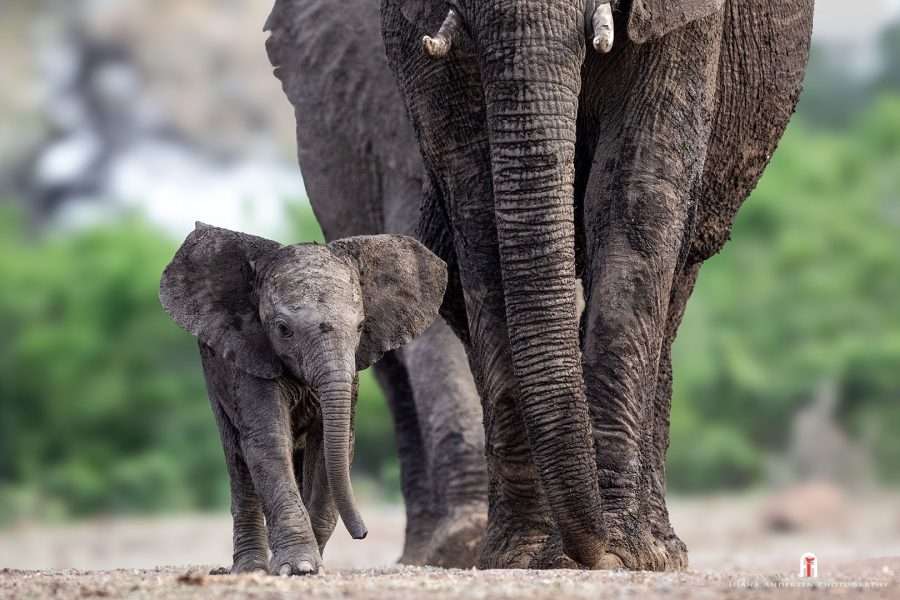
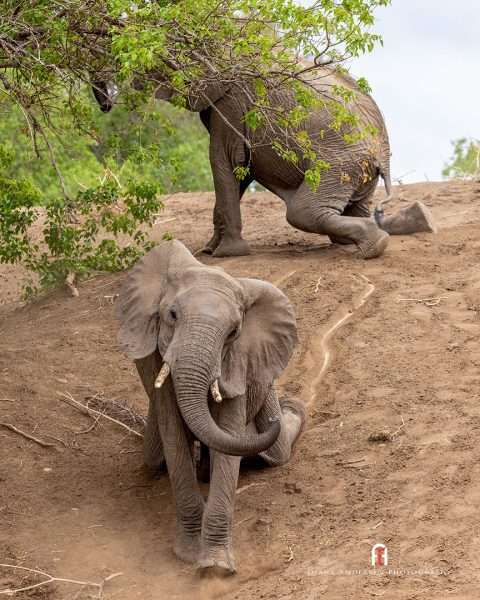
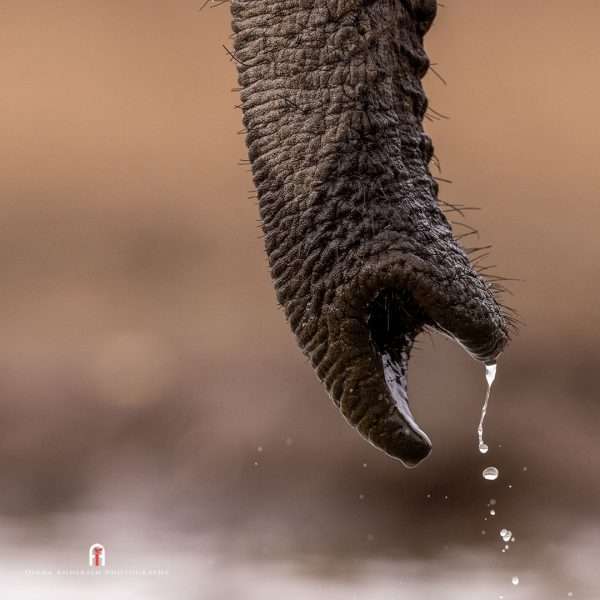
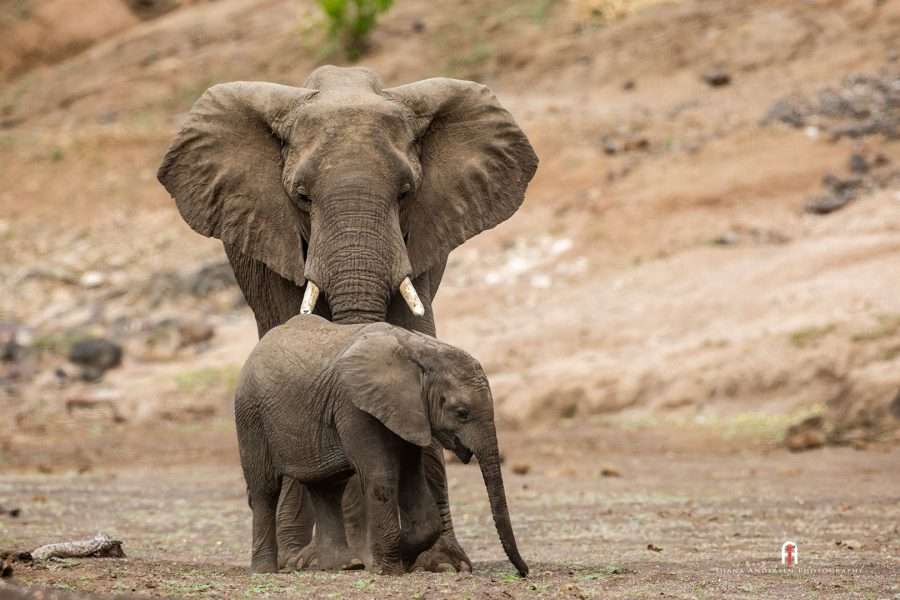
Vehicles, boats, and hides provide great opportunities to see and photograph elephants up close, making a wide-angle lens a valuable addition to your photography kit. You can request that your guides stop further away from the elephants; however, unless you’re in a vehicle by yourself or part of a dedicated photo tour, be aware that many other guests may want to get as close as possible, as many people are simply using their phones. Elephants are fantastic subjects for creative close-ups, so this is something worth exploring if you are too close to your subjects.
Elephants are enormous, so unless you are focusing on detail using a shallow depth of field to isolate something like an elephant’s eye, a higher aperture is desirable to get the whole elephant or group in focus, particularly at longer focal lengths. Elephants are also relatively slow-moving, so in most situations, you can lower your shutter speed to help keep your ISO lower in low light and situations where you want to use a higher aperture. You can also try panning with the elephants if they are in motion and your shutter speed is slow.
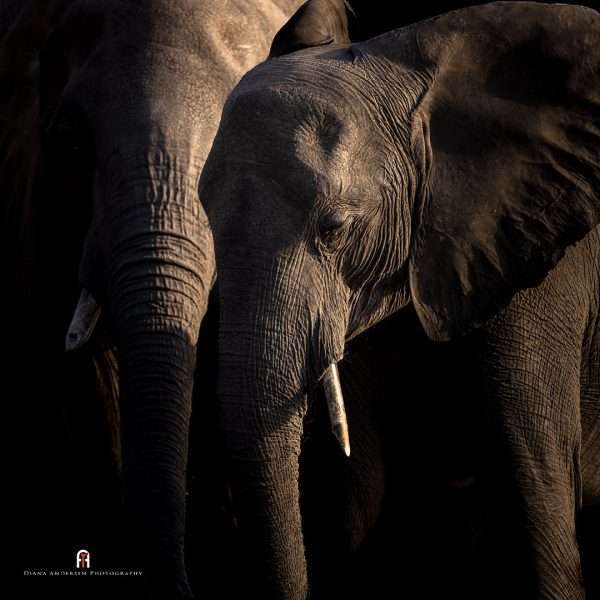
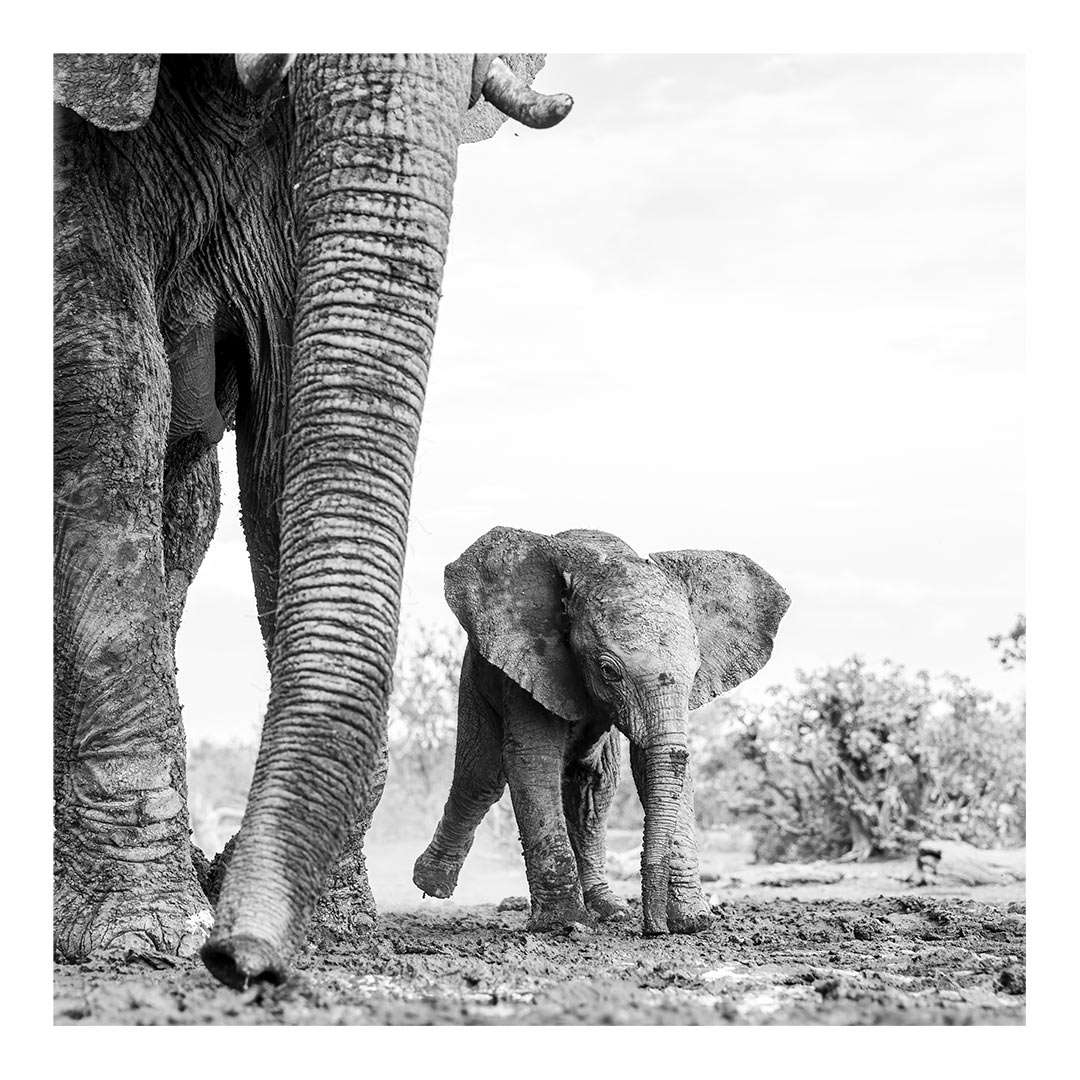
Because of their size and habit of staying close to each other, be mindful of the shadows they are casting on each other. Ask your guide or driver to approach from a direction that minimises shadow, provided it is safe to do so. Alternatively, use the juxtaposition of strong shadows to enhance the shapes of the elephants. The light in Botswana can get harsh quite quickly, increasing shadows and contrast. The texture of elephant skin can translate well into monochrome images in high-contrast situations.
Monochrome Elephant Images
However, another consideration before shooting with monochrome end images in mind is tone. In monochrome images, elephants appear as mid-grey without much variation. The Botswanan bush, both dry and green, also translates to a mid-grey. Therefore, if you don’t want muddy images where the subject blends into the background, aim to photograph your subjects against the open sky or a very dark background, something that translates well into black and white. For creative close-ups in monochrome, look for areas with considerable contrast, which provides a good tonal range in your final image.
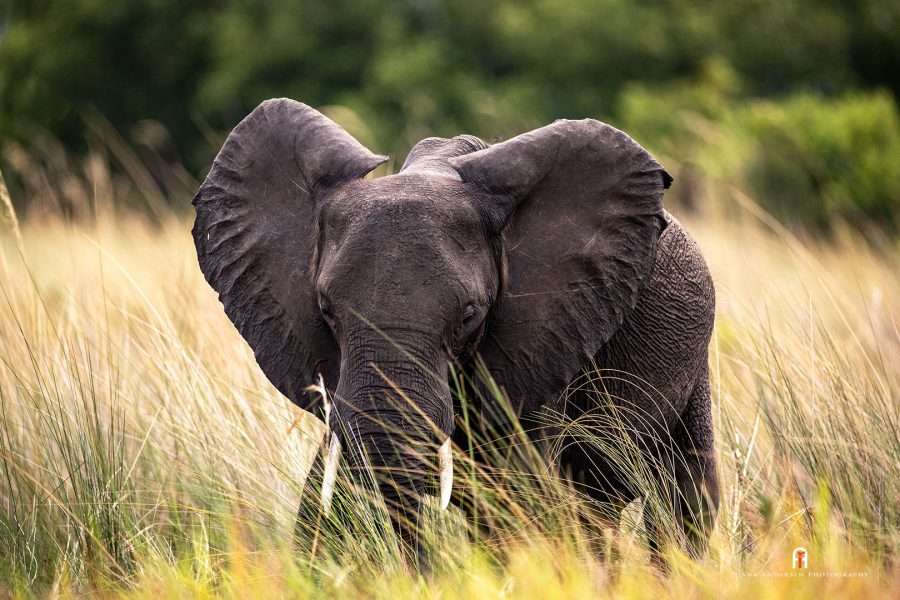
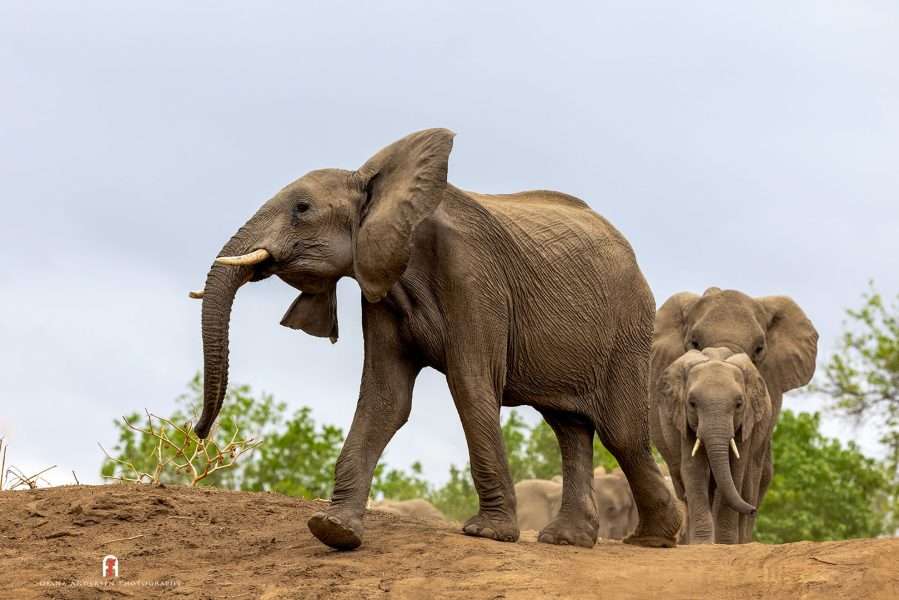
Lastly, elephants flap their ears frequently and catching them with their ears spread wide will always make for a more engaging image!
TO JOIN DIANA IN BOTSWANA – LEARN MORE & BOOK
Share this
Related Reading
Staying Close
A beautiful black and white limited-edition print by Diana Andersen. For anyone who has witnessed elephants in Africa, this image will take you back to the special place that is Africa.
SHOP WILDLIFE LENS
AMAZON
We are a participant in the Amazon Services LLC Associates Program, an affiliate advertising program designed to provide a means for us to earn fees by linking to Amazon.com and affiliated sites
SHOP WILDLIFE BOOKS