
The Remarkable Life of Australian Kangaroos
Words and images, Diana Andersen
The legend of Bigfoot is a myth, but Australia has its own Bigfoot, and it’s no myth. As most people know, kangaroos are marsupials, but they belong to the family Macropodidae, or macropods. The term “macropod” is derived from the Greek words “macro,” meaning ‘big,’ and “pod,” meaning ‘foot,’ referring to their large, powerful hindquarters. The Macropodidae family also includes wallabies, tree kangaroos, potoroos, and bettongs, among others.
There are four recognised species of kangaroos: the western grey, eastern grey, antilopine, and the red kangaroo. Male kangaroos are commonly called bucks, boomers, or jacks, while females are does, flyers, or jills, and their offspring are called joeys. Collectively, they are often called ‘roos’ in Australia. Kangaroos are herbivores, primarily feeding on grasses and other vegetation, which also supplies most of their moisture requirements.
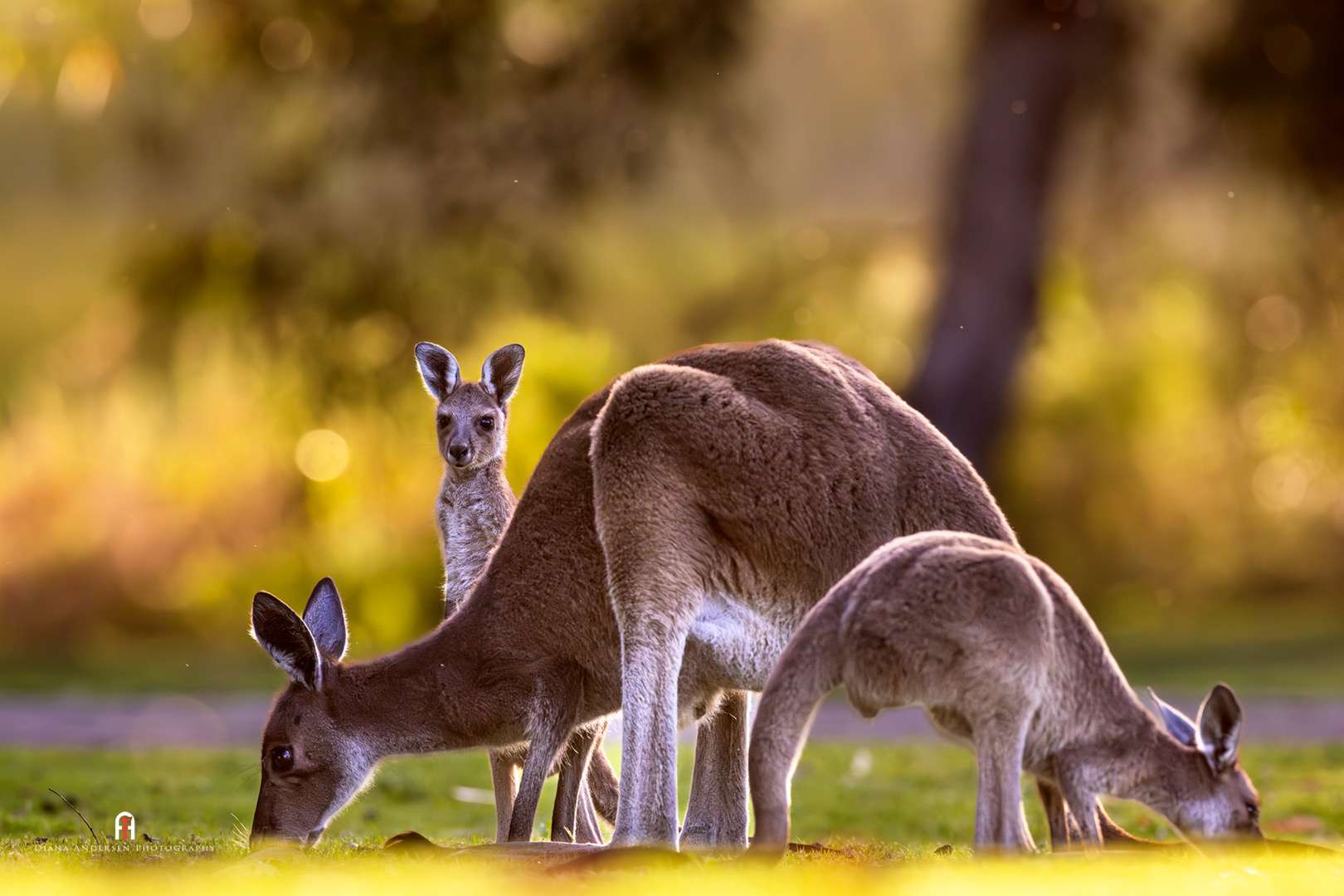
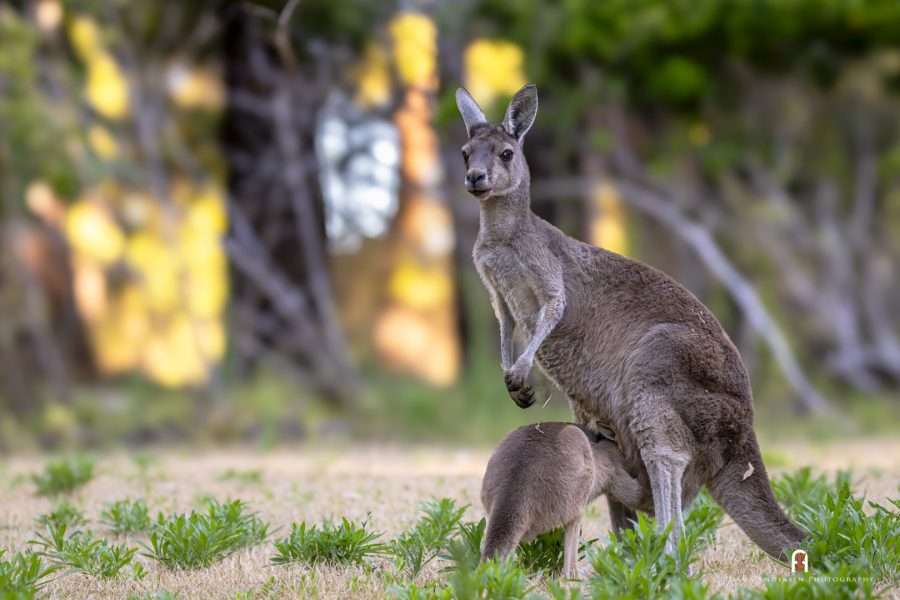
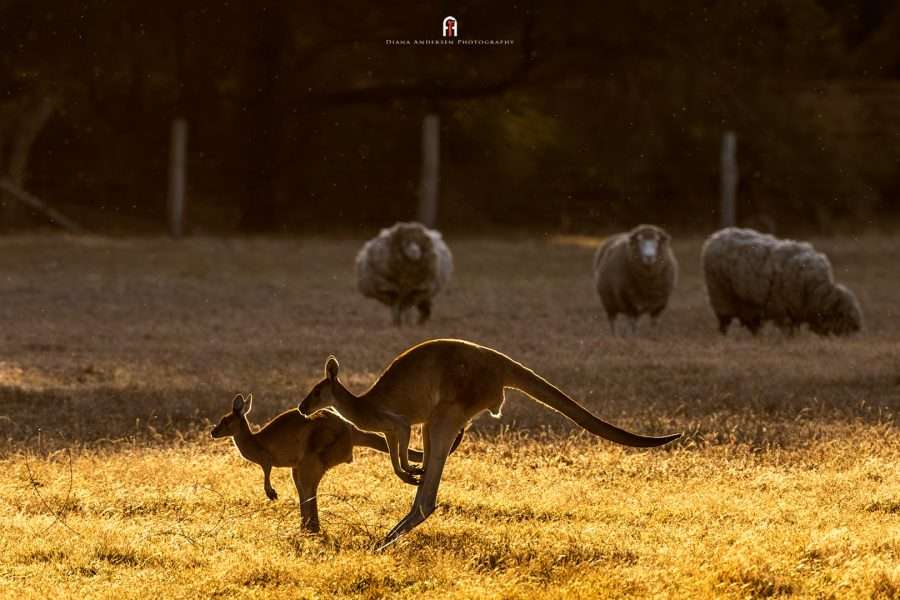
Western Grey Kangaroo Family
The Path to Mob Dominance
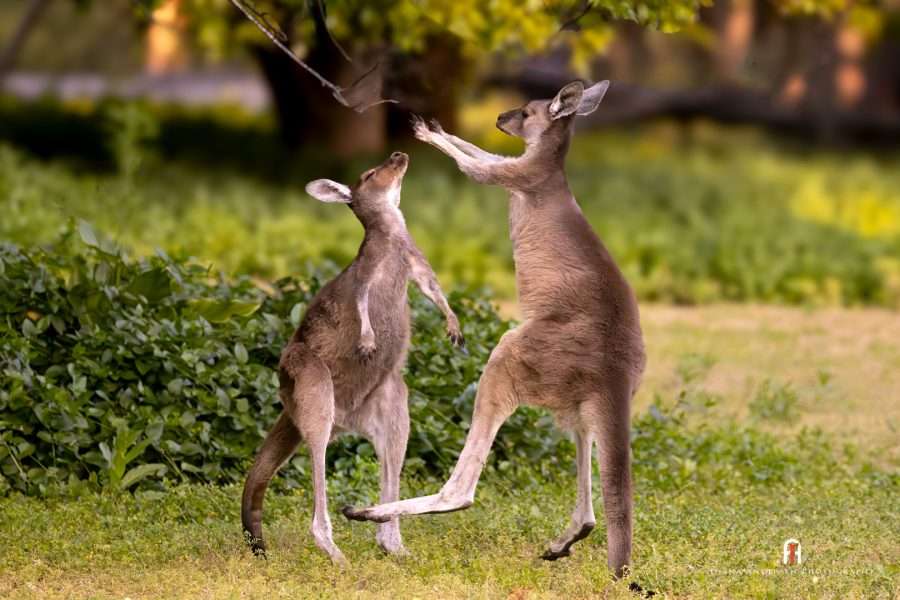
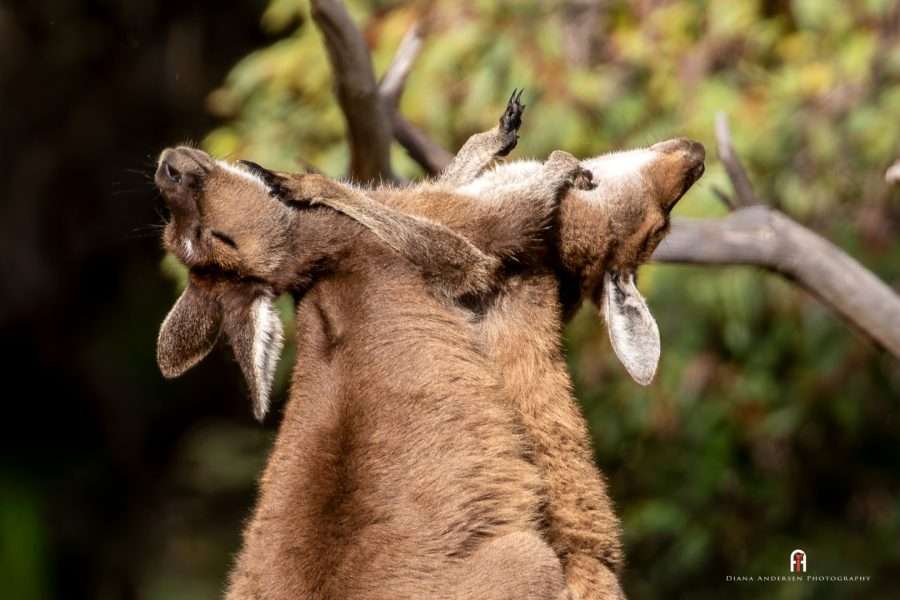
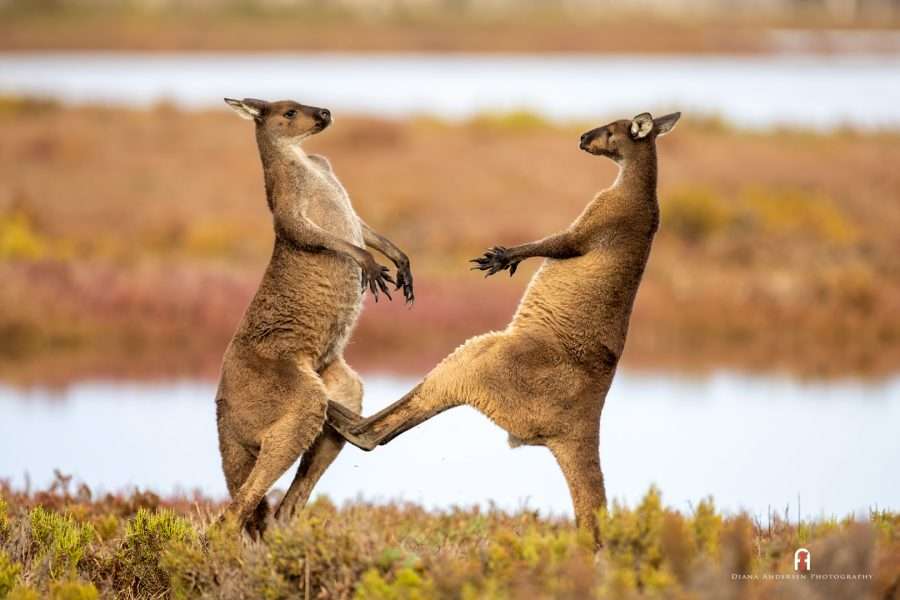
Kangaroos live in groups known as mobs, which typically consist of a dominant male, several females, joeys, and subordinate males. The journey to a mob’s dominance is through fighting, which begins as joeys. Youngsters learn through playfighting, a peculiar mix of kickboxing and wrestling, in which contestants grapple while protecting their faces. The older and stronger a male becomes, the more serious and potentially life-threatening the fights become. Males can seriously injure or even kill each other in the battle for mating rights. Being a mob leader can be challenging and often detrimental to an animal’s health, resulting in short-lived dominance.

ANIMALINFO PUBLICATIONS
DIANA ANDERSEN
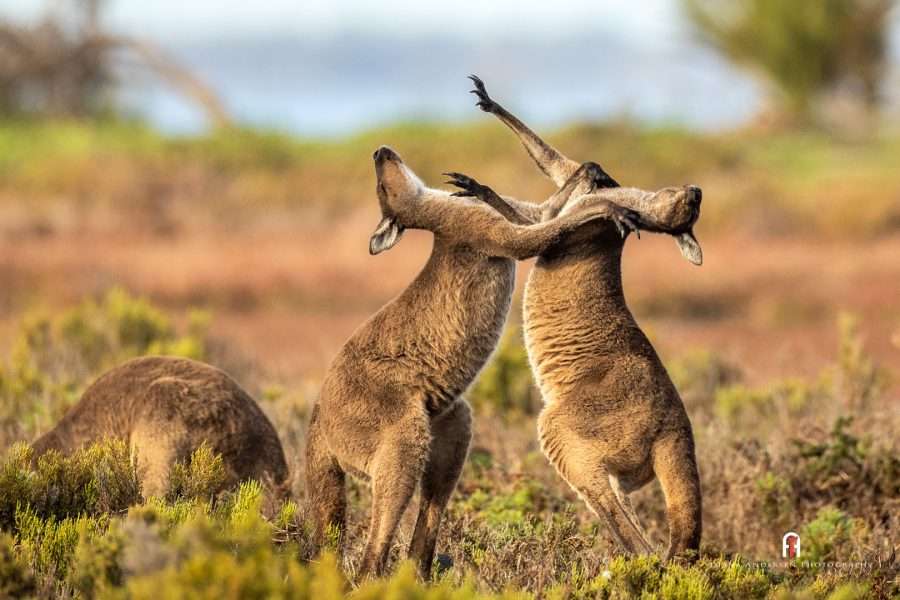
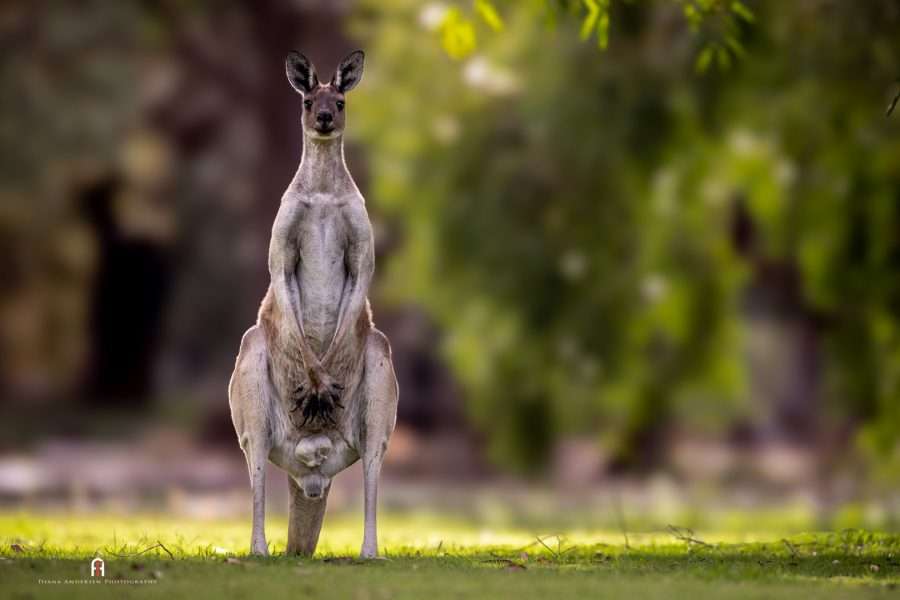
Subordinate males may mate with females, but only if the dominant male is unaware of their activities. Females may be protective of their joeys, but generally do not fight with one another. However, females are considerably smaller than males and can be injured if they are not receptive to their mating attempts.
The Unique Reproduction of Kangaroos
Gestation in kangaroos is short, averaging 31 days. They give birth to tiny naked offspring, about the size of a jellybean, that crawl through the mother’s fur until they find the pouch and attach themselves to a teat. The teat swells in the joey’s mouth, helping it remain firmly attached as it grows. During this time, females may also have an older joey at their side, still nursing from a second teat in the pouch. Kangaroos have four teats in total.
In a remarkable adaptation, kangaroos produce nutritionally distinct milk for each joey, ensuring each joey receives the nutrients it requires at its developmental stage. Joey’s typically leave the pouch intermittently at 8 to 10 months of age, and by 11 months are usually too big to fit in it. However, the older joey may nurse until it is 18 months old, while the smaller joey continues to grow.
As extra insurance, another embryo is often in a female’s uterus at the same time as she has a pouch joey and an older joey still nursing. In another unique adaptation, kangaroos can suspend embryo development in the uterus until the youngest joey leaves the pouch or she loses a joey. This process, called embryonic diapause, ensures that mature females are rarely without a joey and allows them to delay birth when food is scarce. However, western grey kangaroos do not practice embryonic diapause. Instead, they come into estrous when their joey is about to leave the pouch permanently.
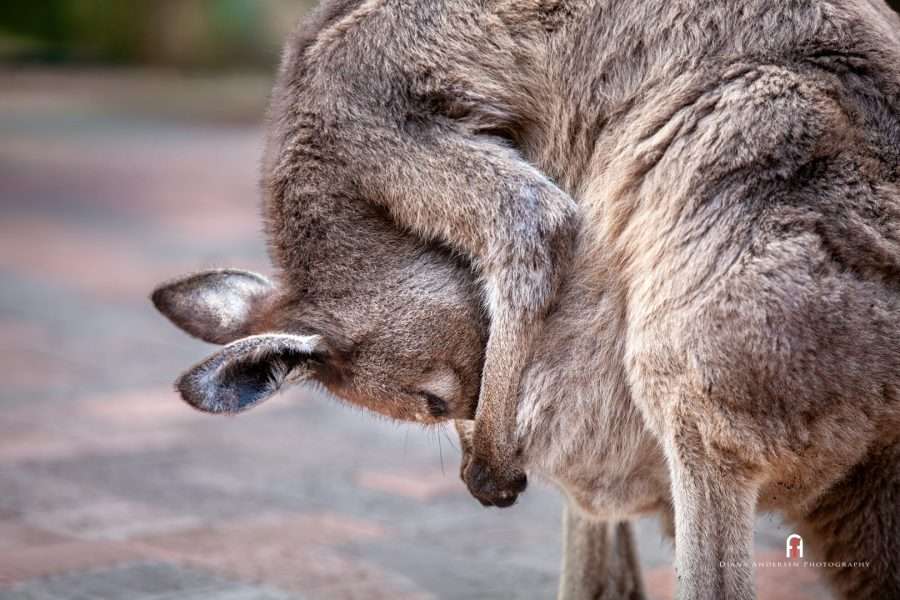
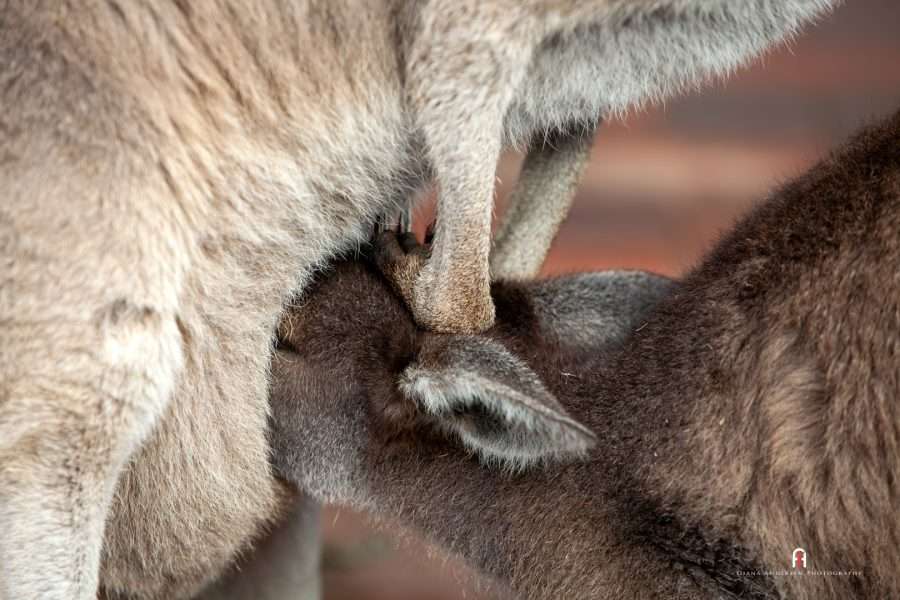
The Kangaroo Pouch
The pouch of a kangaroo is another remarkable feature of these unique marsupials. It has very elastic qualities and can stretch to an impressive size to accommodate large joeys somersaulting vigorously into the pouch. A brown, tacky substance coats the pouch lining, restricting the growth of bacteria and fungus. Kangaroos can also open and close their pouches using powerful muscles. This ability helps keep the joey clean and secure while also allowing the female to put her own head in the pouch to clean and toilet the joey.
In rare cases, kangaroos have two joeys of the same age in the pouch. This situation is not ideal, as it places significant strain on the mother, and the pouch has limitations on how far it can stretch. This situation means that at least one joey will be forced to leave the pouch earlier than it should, often resulting in the death of at least one of the joeys.
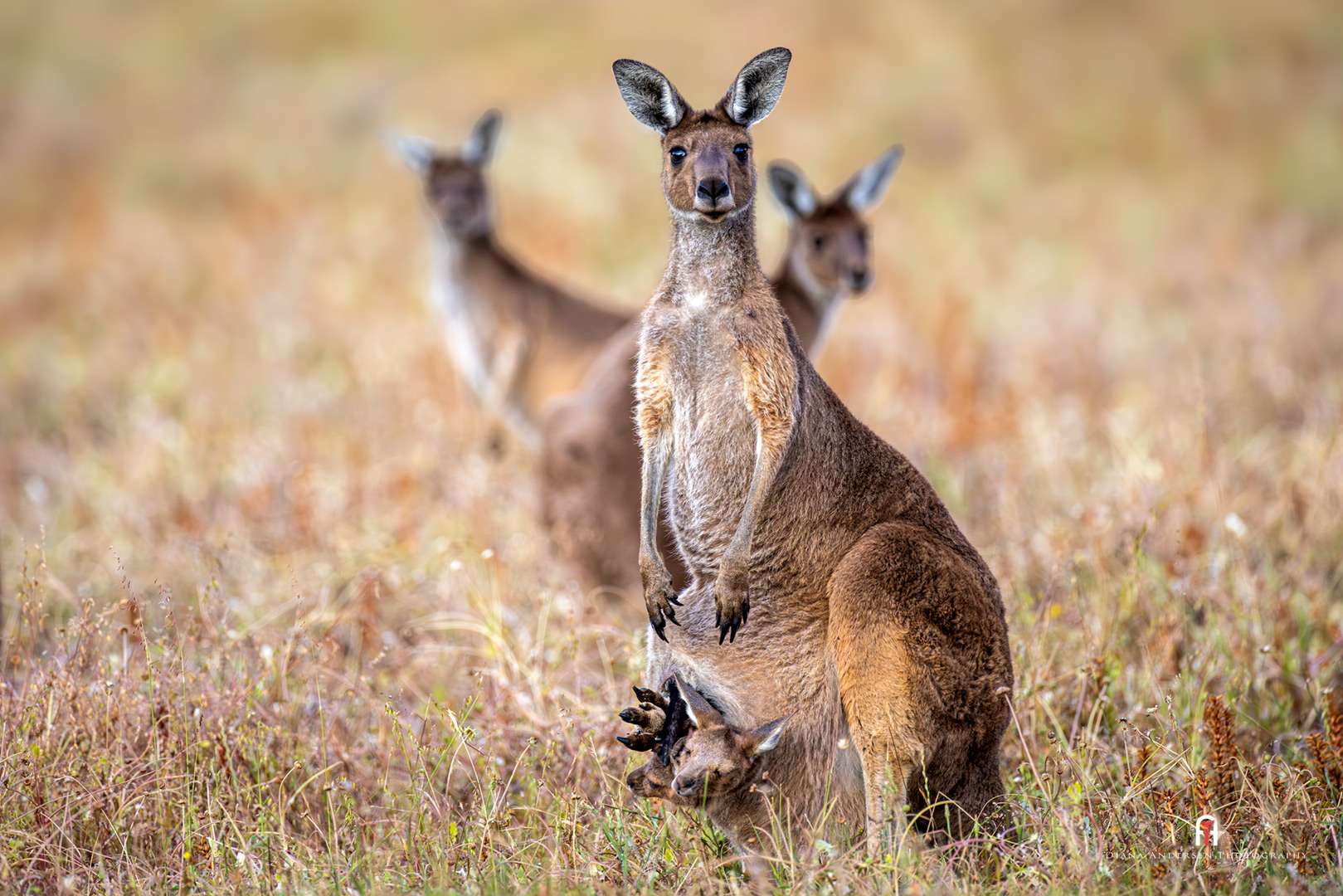
Western grey kangaroo with two joeys in the pouch.
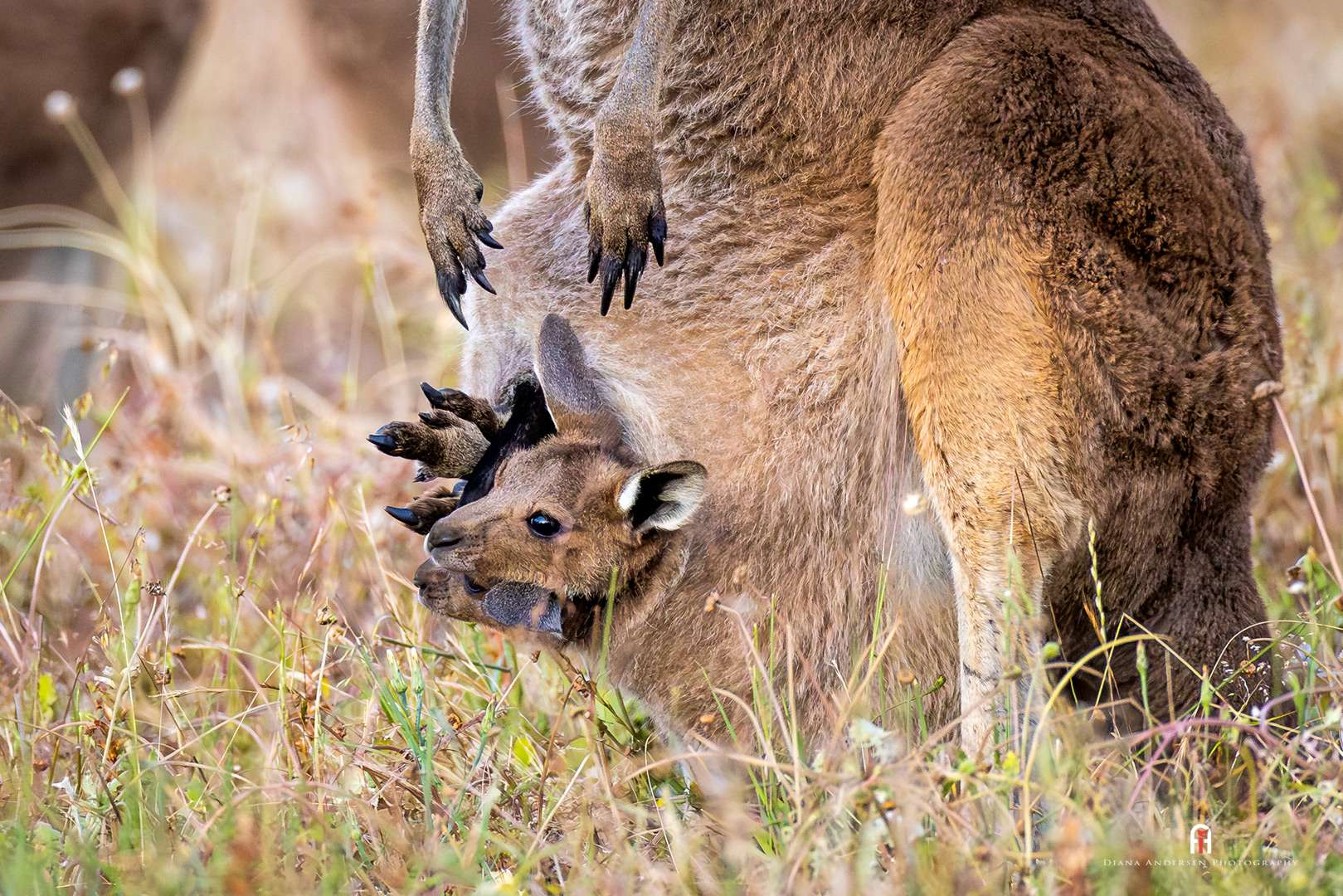
Western grey kangaroo twin joeys in the pouch.
Kangaroos on the Move
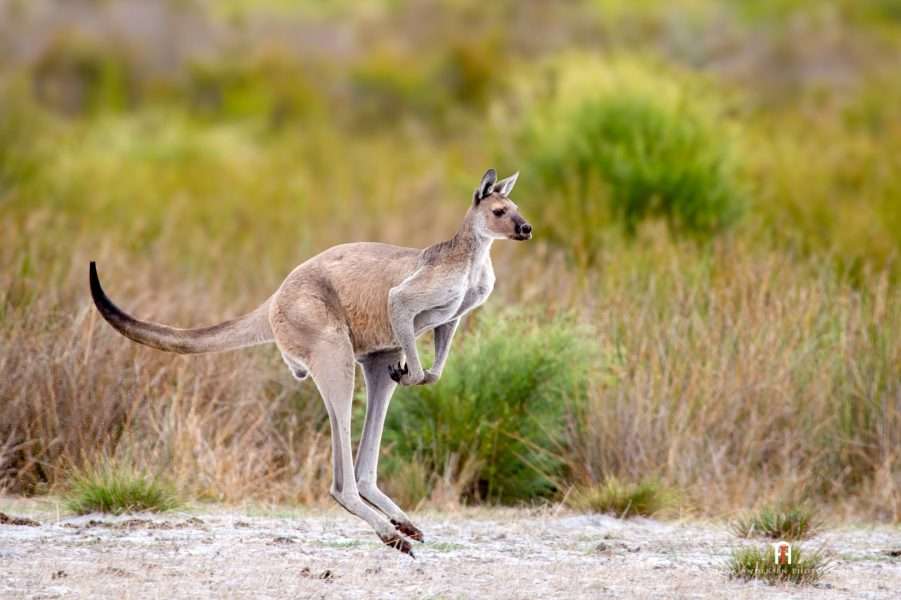
A kangaroo’s anatomy enables strong, effortless forward movement during hopping. However, this design makes backward movement and slow movement more difficult. When grazing, kangaroos use their tails as a third leg, forming a tripod that helps them maintain balance. Doing this allows them to leverage their hindquarters forward together, a movement known as pentapedal locomotion. Although this method may seem slow and awkward, it is well-suited to grazing. Once a kangaroo begins to hop, their movement becomes highly efficient, particularly at moderate speeds, storing 70% of the energy in their elastic tendons. They can hop at speeds of 40km/h for up to 2km.
The Challenges Facing Kangaroos
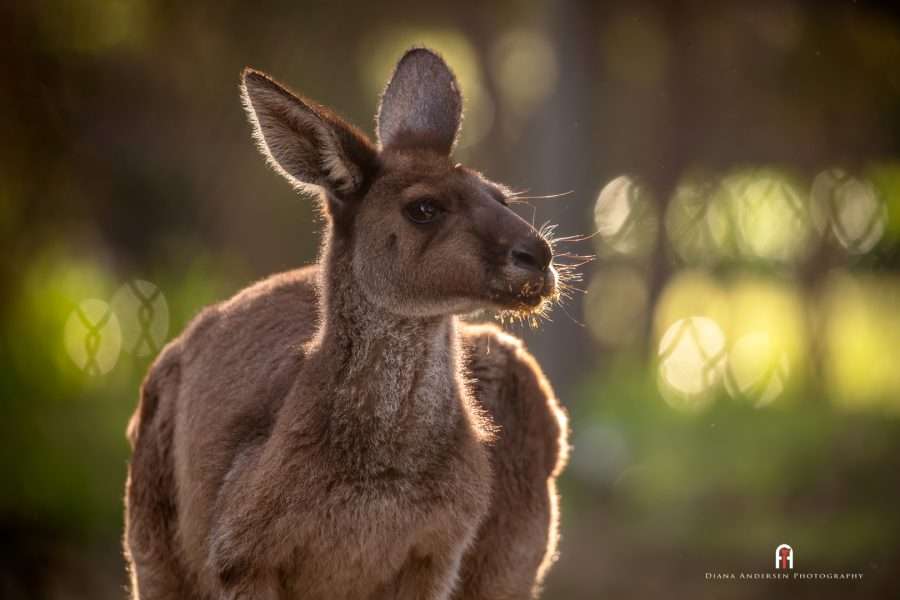
Kangaroos are adaptable animals that often live in semi-rural and rural areas near towns and cities. It is not uncommon to find them in bushland near suburban areas. As these areas continue to expand, kangaroos often find their habitats surrounded by housing developments. This proximity to populated areas increases the risk of injuries and fatalities from car strikes and other causes.
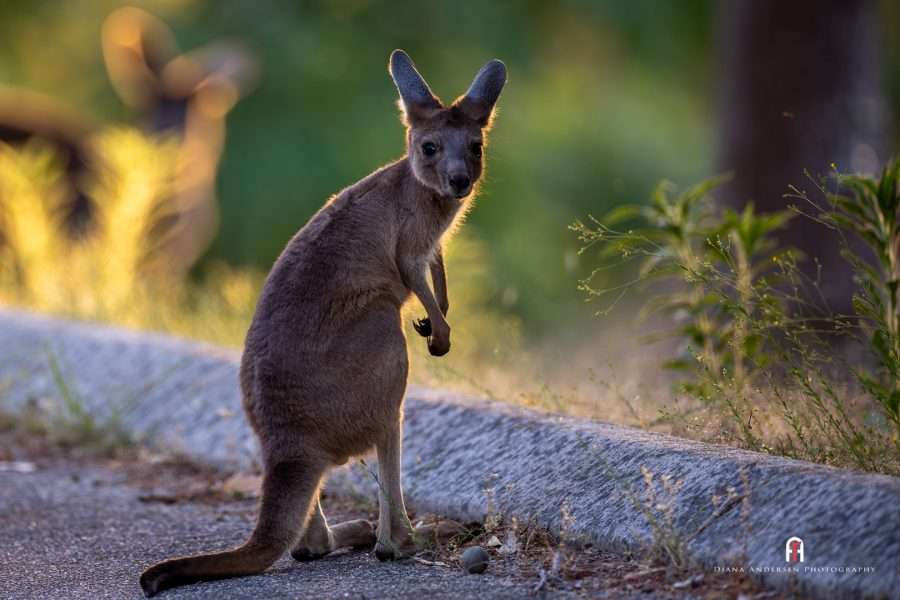
In outer rural and inland areas, kangaroos often feed along roadsides because road runoff creates patches of green grass. Kangaroos are crepuscular, which means they are most active at dawn and dusk. Unfortunately, these times often coincide with reduced visibility on the roads, increasing the risk of accidents and injuries.
Other challenges include becoming entangled in wire fencing while trying to jump over it, leading to a painful and prolonged death. Additionally, dog attacks pose a serious threat to kangaroos, particularly when dogs are allowed to roam or exercise off-leash in bushland areas frequented by kangaroos.
Capture myopathy is a condition in macropods that occurs due to extreme stress and fear, such as being chased by dogs or bikes, or being trapped in situations that cause them to become highly stressed without physical injury. The condition can often be fatal, resulting in muscle breakdown and organ failure, including heart and kidney damage.
What to Do if You Encounter a Deceased Kangaroo
If you encounter a kangaroo that has been fatally struck by a vehicle, it is always worth checking the pouch. A joey can survive in the pouch for up to 72 hours under the right conditions. An experienced wildlife carer can raise a joey that is as small as your hand, but only if they can get specialist care as quickly as possible. Wildlife carers refer to unfurred joeys as pinkies.
If you find a deceased kangaroo with a pinkie joey still attached to the teat, it is essential to cut the teat off while leaving it in the joey’s mouth. Doing this helps prevent damage to the young joey’s mouth. If you’re planning a road trip in rural areas where you might encounter kangaroo casualties, consider bringing along a few basic supplies. For more information on assisting an orphaned joey, please refer to our online guide.
Further Reading
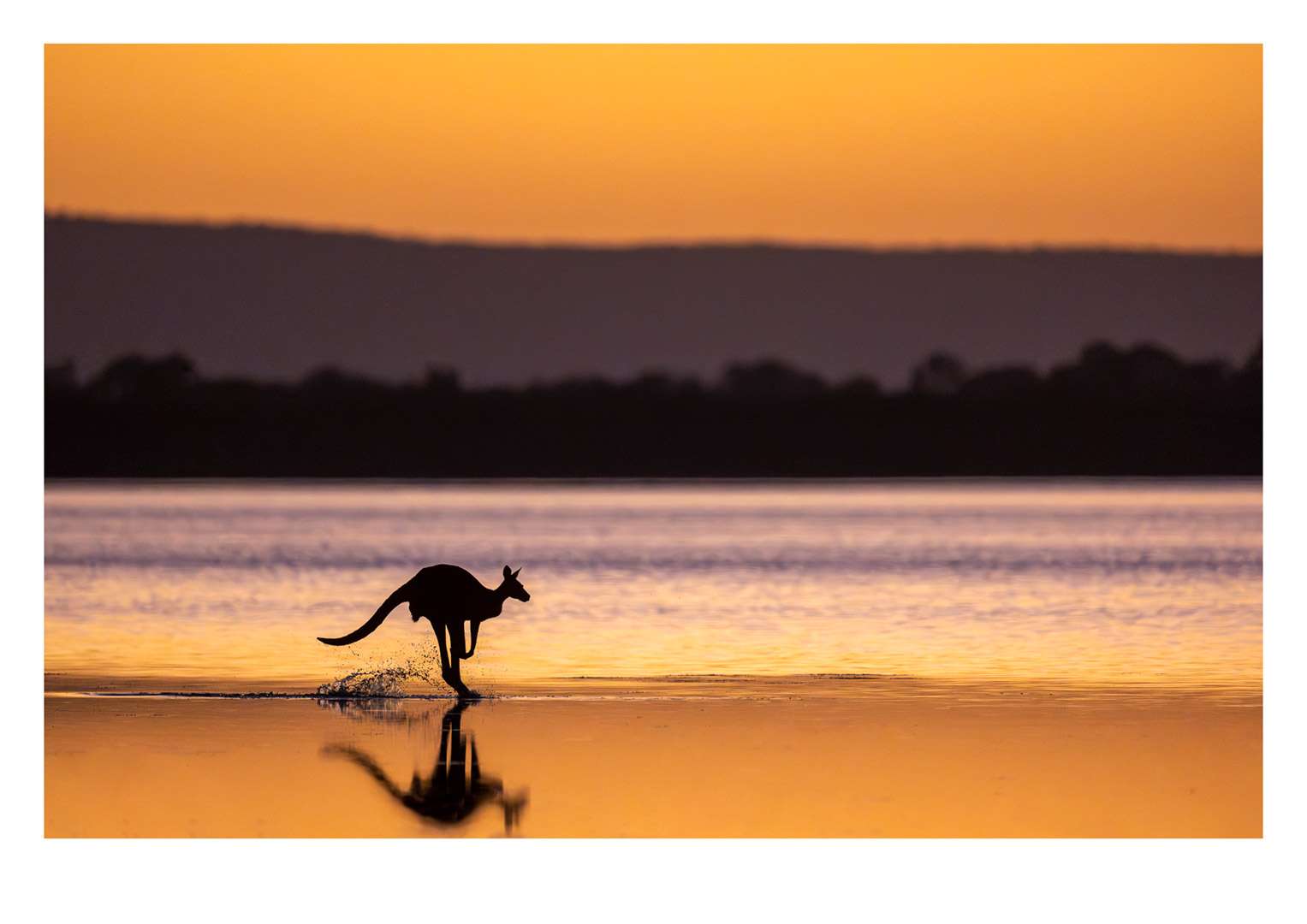
KANGAROO ON THE ESTUARY
Related Reading
SHOP BOOKS
AMAZON
We are a participant in the Amazon Services LLC Associates Program, an affiliate advertising program designed to provide a means for us to earn fees by linking to Amazon.com and affiliated sites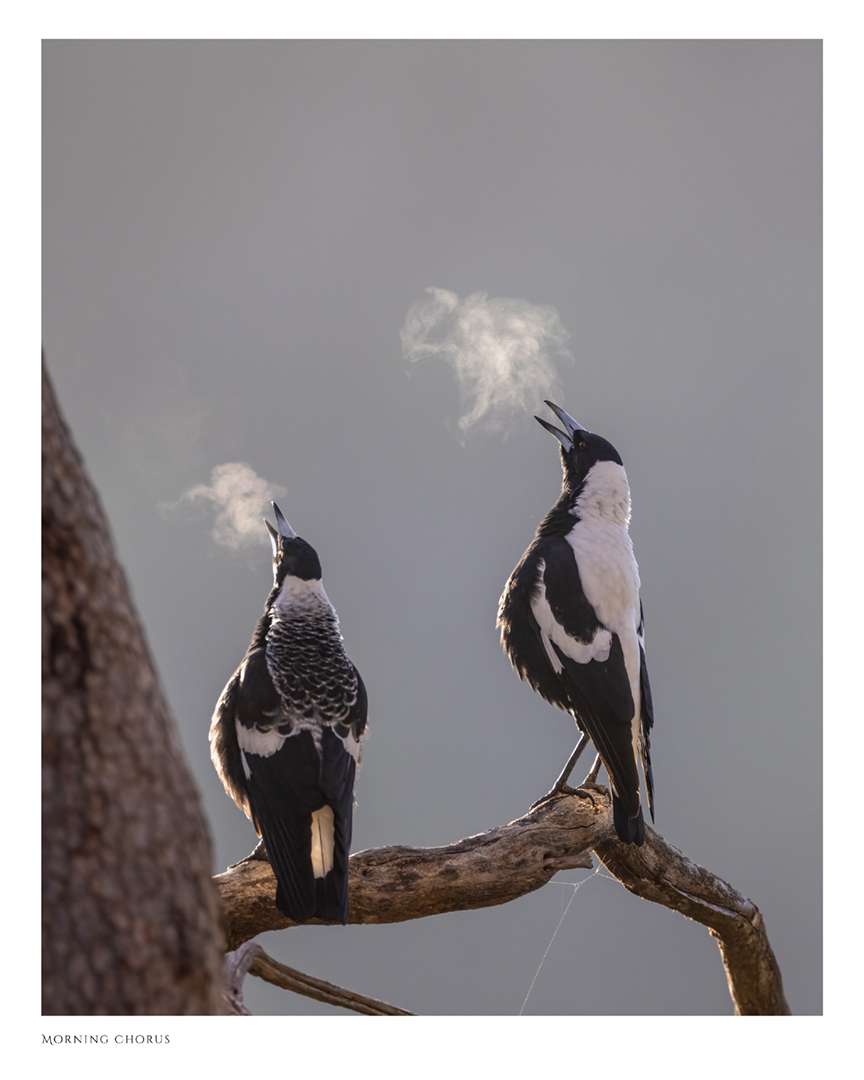
Morning Chorus
A limited-edition print by Diana Andersen. Two iconic magpies serenading a frosty morning, the perfect gift for lovers of Australian nature.