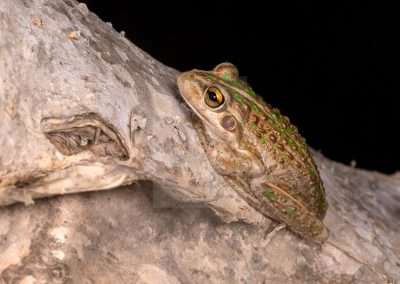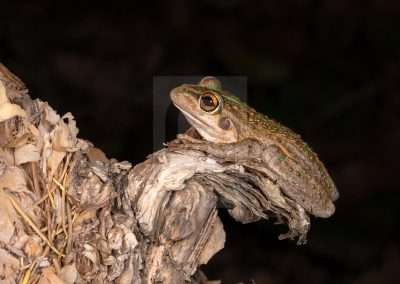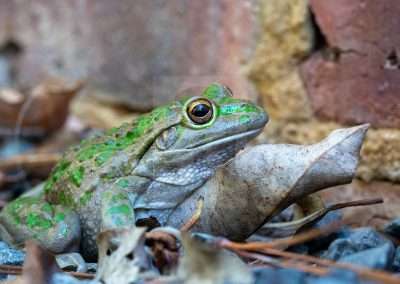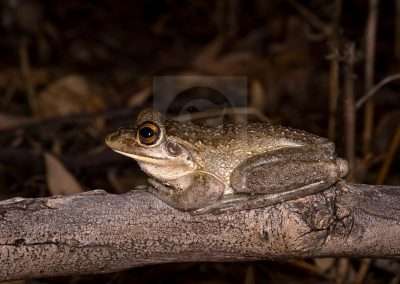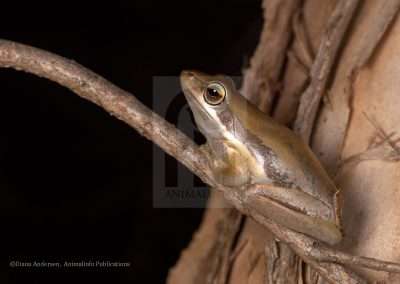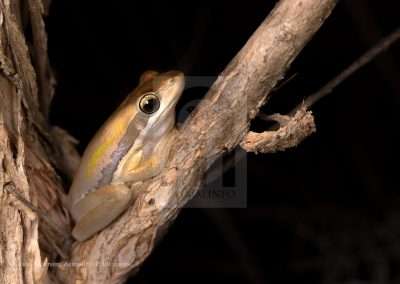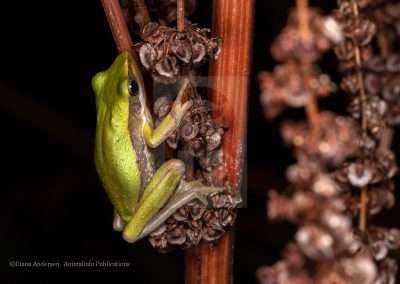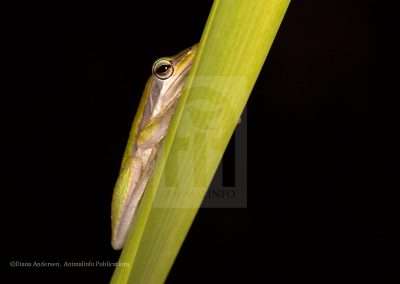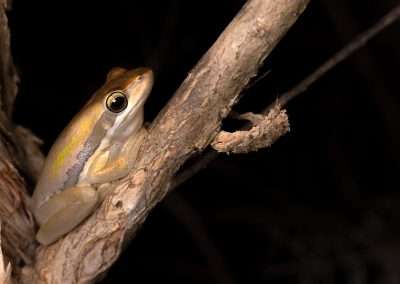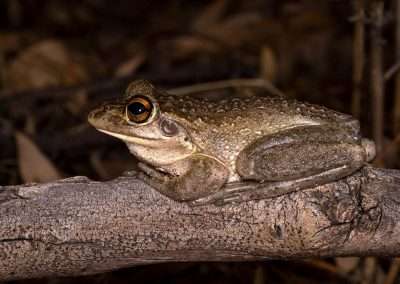
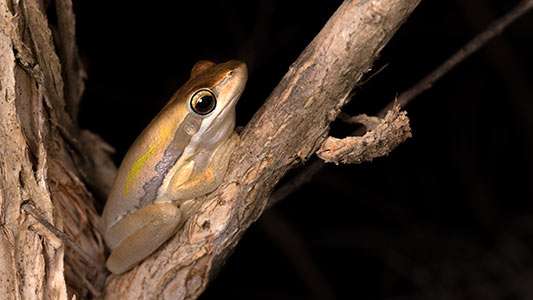

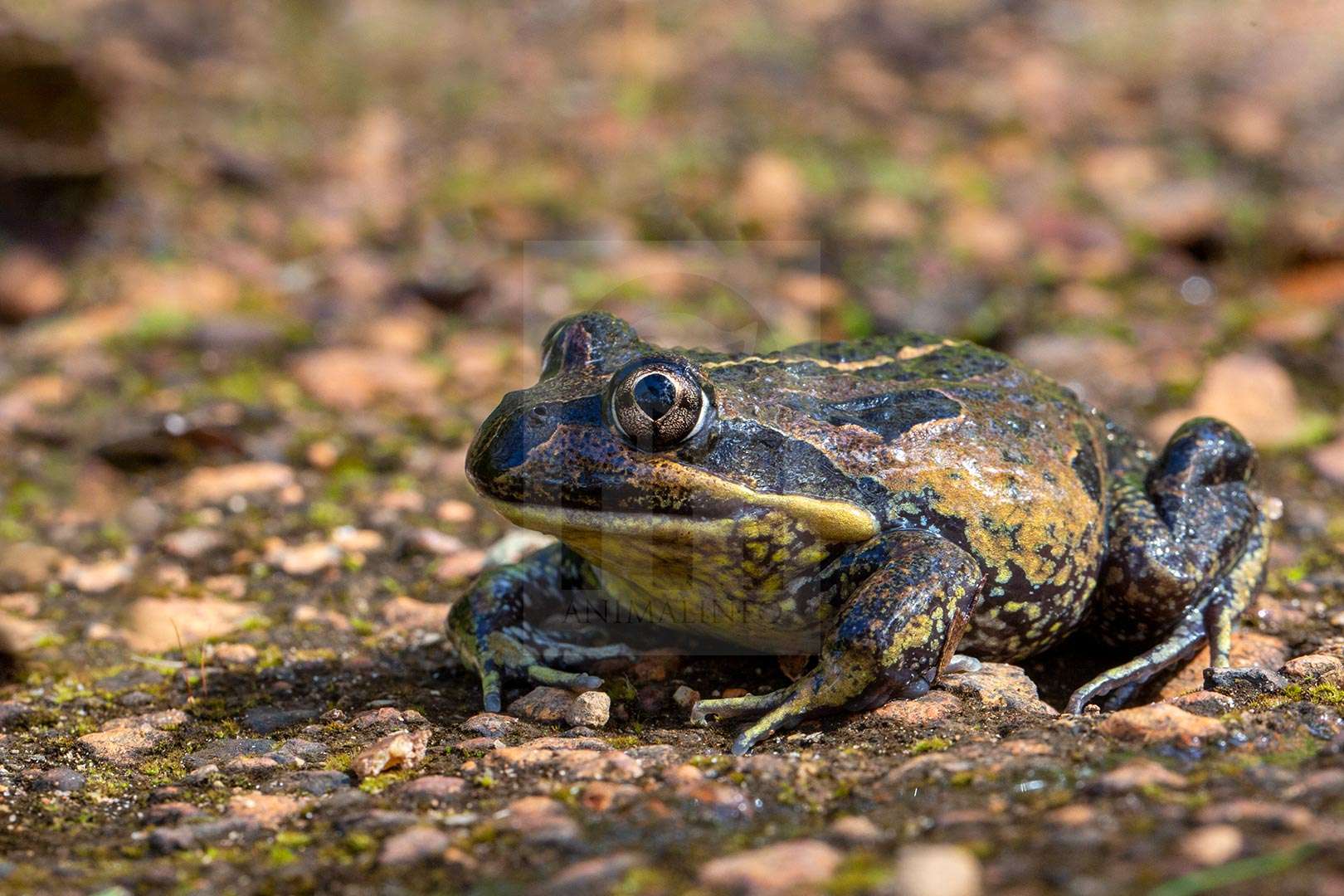
The pobblebonk, or Western banjo frog, is a large frog found southwest of Western Australia. The origin of the common name, ‘Pobblebonk’, is the loud solitary bonk sound reminiscent of banjo strings being plucked during the breeding season.
Pobblebonk Frog
(Limnodynastes dorsalis)
Description
If you live in the southwest of Western Australia, you probably have never seen this frog, but you may have heard its call. The origin of its common name, ‘Pobblebonk’, is the loud solitary bonk sound made during the breeding season. It is also called the Western Banjo Frog. The repetitious bonking sounds are reminiscent of someone plucking banjo strings.
They are substantial frogs around 7.5cm long, dark grey-green or brown with irregular mottled darker markings, bright red patches in the groin, and a thin yellow stripe that runs down the body’s centre.
In the breeding season, males develop nuptial pads and a dark throat. Pobblebonks inhabit rural areas near dams, swamps, and wetlands. However, they can also be found some distance away from water sources concealed in sandy burrows.
Pobblebonk Frog Breeding
The breeding season for Pobblebonk frogs commences with calling in winter and extends into the early summer. Females create a floating foam nest by slapping the water’s surface, and hanging vegetation conceals the nests until the eggs hatch. Tadpoles are large and slow to develop, metamorphosing into froglets in early summer through to early autumn.
Pobblebonks readily move into dams and garden ponds due to shrinking natural habitats. They feed predominantly on insects and worms, making them a great inhabitant of backyard ponds.
Scientific Name: Limnodynastes dorsalis
Family: Hylidae
Distribution: Southwest Western Australia from Kalbarri and east to Cape Arid
Size: Up to 7.5cm
Share this
Shop Stock Images
High-quality stock images for personal use as wall art, gifts, and greeting cards. Licences available for commercial use, including websites, publications and commercial print runs.