
Avoiding Unnecessary Casualties
Author: Society for the Preservation of Raptors.
It is sad but true that many native animals fall victim to vehicle strikes on our busy highways and roads. Reducing raptor roadkill on major highways where large, heavy vehicles are travelling up to 100 km/hr is possible by removing carrion from the road.
It is often impossible for drivers to avoid hitting wildlife, mostly kangaroos. The unfortunate demise of kangaroos on our highways leads to a secondary death toll among Wedge-tailed Eagles, which drivers can avoid if you move carcasses off the road when you see them.
If you leave carrion on or near the carriageway, scavenging Eagles can also fall victim to vehicle strikes. The Wedge-tailed Eagle is a large bird and can only take off into the wind to generate enough lift to get airborne.
Whilst they have quick reflexes, they are not ‘traffic-wise’ and have difficulty taking off to a safe height when startled by a vehicle. In this way, many cars and trucks inadvertently kill eagles. Vehicle damage and driver and passenger injury can also occur when this happens.
One Society for the Preservation of Raptors member observed and photographed fourteen Eagles that had been struck and killed by vehicles on one 530 km road trip in Western Australia’s Goldfields in 2008. All of these birds had been feeding on carrion that was on or close to the carriageway.
Reducing raptor roadkill by removing food sources.
Removing dead kangaroos and other animals from the carriageway and road shoulder can reduce the risk of vehicles striking eagles and other scavengers. By doing so, we also reduce the risk to ourselves and other road users. Removing a fresh kangaroo carcass is straightforward – protect the hands with gloves and drag the animal off by a leg or a tail. If the animal is female and you know how to check the pouch for young, please do so once the carcass is off the road.
Points to consider:
- Only stop to remove a fresh carcass if it is safe to do so. Consider visibility and road conditions for road users approaching you from all directions—Park in a safe place and put your hazard lights ON.
- Beware of long grass and undergrowth in warm weather – snakes do not like being trodden on.
- Remove the carcass to a safe distance. M is ideal, but avoid putting yourself at risk by traversing hazardous terrain.
- Ensure you have a barrier (i.e., glove, towel or rag) between yourself and any body fluid on or around the carcass.
- Dispose of soiled gloves thoughtfully (please don’t litter!) and immediately clean your hands with water or a moist towellette.
- Be careful and check the traffic before returning to the roadway.
- If you cannot stop or feel it would not be safe, please report the carcass to the local authorities (Shire office, Lessee or Mine Site Environmental Officer) responsible for that stretch of road. They may be able to handle the removal safely.
You may find it helpful to carry the following items in your car on long trips:
- Disposable latex gloves (valuable items to have in your first aid kit.)
- Moist and antibacterial wipes (applicable in all situations, especially if you have children.)
- A rubbish disposal bag (for all manner of litter.) The more people willing to carry off carrion, the safer our roads will become for our Wedge Tailed Eagles and road users. Removing a carcass safely only takes a few minutes out of a journey and is an investment in the future of our wildlife.
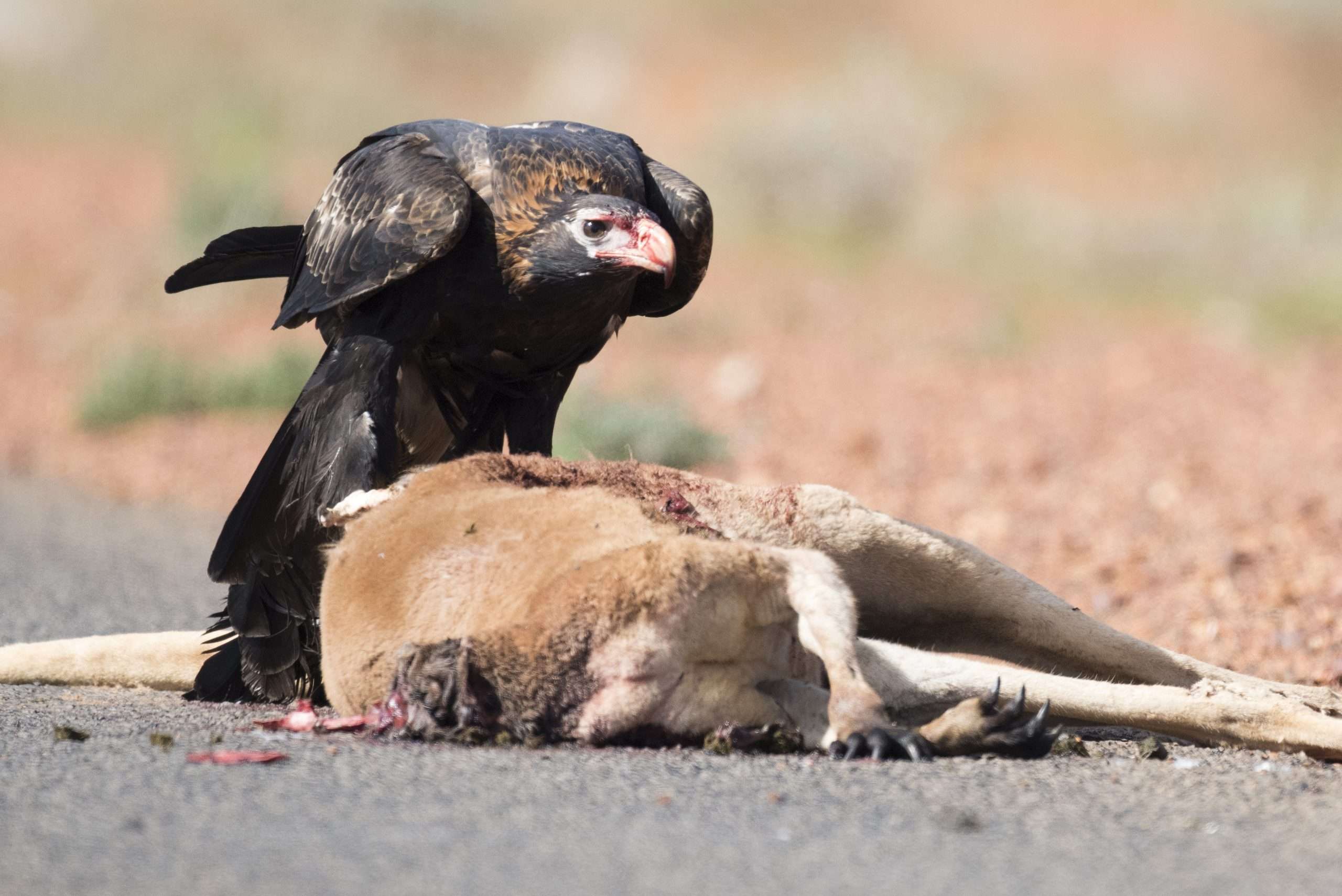
Wedge-tailed eagle feeding on a Kangaroo carcass.

ANIMALINFO PUBLICATIONS
DIANA ANDERSEN

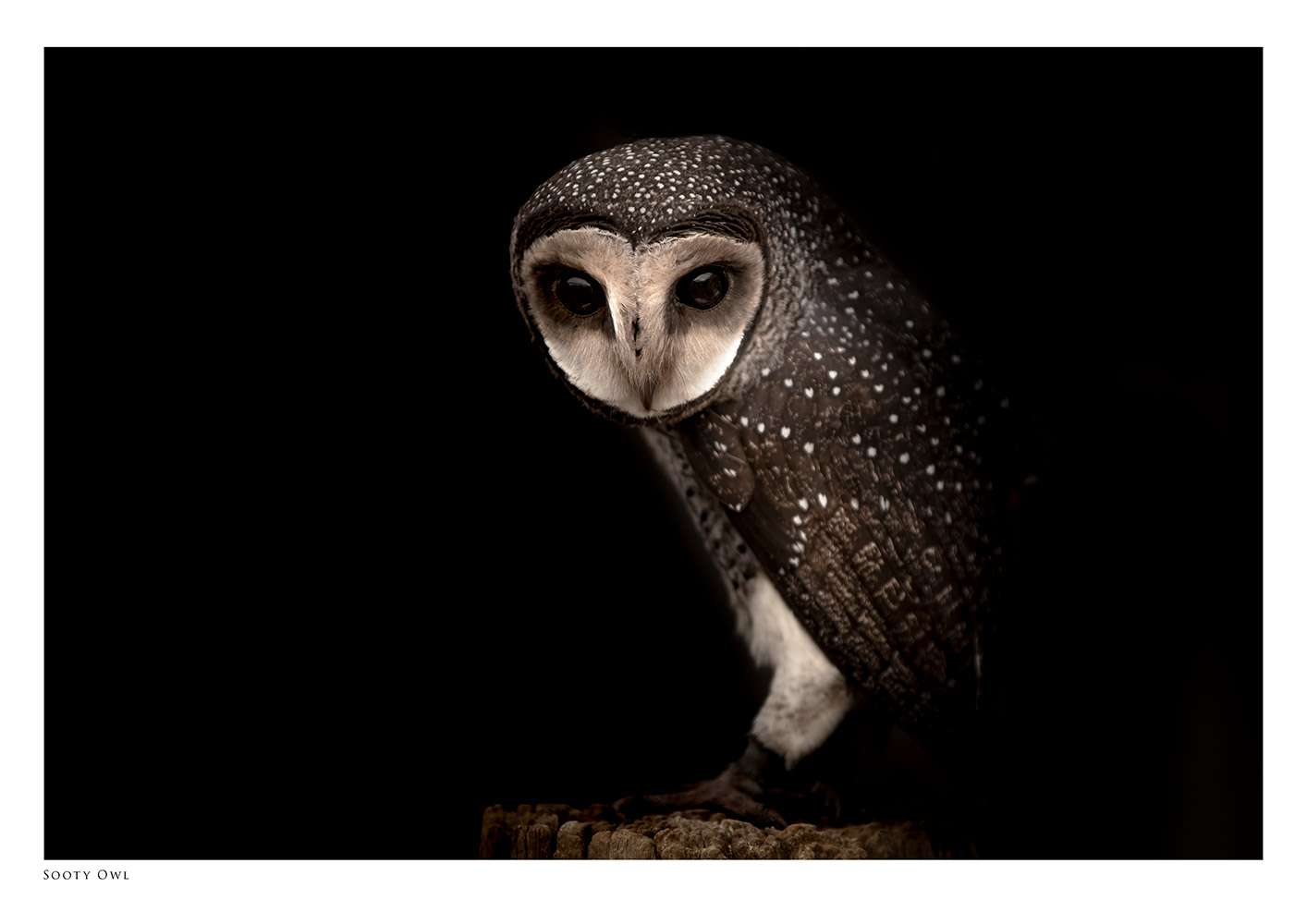
SOOTY OWL
This fine art print of a Sooty Owl on a dark background is a limited edition print by Diana Andersen SHOP NOW >
Related Reading
SHOP WILDLIFE BOOKS
AMAZON
We are a participant in the Amazon Services LLC Associates Program, an affiliate advertising program designed to provide a means for us to earn fees by linking to Amazon.com and affiliated sites

SHOP WILDLIFE BOOKS